
Introduction
Saga Dawa is the most spiritually significant festival in Tibetan Buddhism. It falls in the fourth month of the Tibetan lunar calendar — known as Saga Dawa month — and reaches its peak on the fifteenth day, the full moon day. In 2026, the Saga Dawa full moon falls in June. Every act of devotion performed during this month, from lighting butter lamps to walking the Kailash Kora, carries multiplied karmic merit in Tibetan Buddhist belief. For pilgrims and travellers alike, this is the single most powerful time to visit Tibet.
What Is Saga Dawa? Festival Identity and Tibetan Buddhist Context
Saga Dawa — also written Saka Dawa or Dawa Festival — commemorates three defining events in the life of Shakyamuni Buddha: his birth at Lumbini, Nepal; his enlightenment under the Bodhi tree at Bodh Gaya, India; and his parinirvana (passing into nirvana) at Kushinagar. Tibetan Buddhists refer to the convergence of these three events within a single lunar month as the reason the entire fourth Tibetan lunar month is considered auspicious, not just the fifteenth day.
The word “Saga Dawa” comes from the Tibetan lunar calendar. “Dawa” means month. “Saga” refers to the star (Aldebaran) that appears in the sky during this lunar period. The festival sits within the Tibetan Mahayana Buddhist tradition and draws devotees from across Tibet, Nepal, India, and the broader Himalayan world.
The fifteenth day — the full moon day — is the festival’s focal point. On this day, spiritual merit accumulated through prayer, charity, circumambulation, and observation of the Eight Mahayana Precepts is believed to be multiplied many times over compared to a regular year. This belief is rooted in Buddhist cosmology, specifically the understanding that the alignment of Buddha Shakyamuni’s three life events within one full moon day makes spiritual energy exceptionally concentrated.
Sacred Geography: Where Saga Dawa Is Celebrated

Mount Kailash and the Tarboche Flagpole Ceremony
Mount Kailash, located in Ngari Prefecture in western Tibet at an elevation of 6,638 metres, is the most sacred mountain in both Tibetan Buddhism and Hinduism. Tibetan Buddhists identify Kailash as the earthly residence of Demchog, a tantric deity. Hindus venerate it as the abode of Lord Shiva. Practitioners of Bon, Tibet’s pre-Buddhist spiritual tradition, also regard Kailash as sacred. No mountaineering is permitted on Kailash — the mountain itself is the object of reverence, not conquest.
The Tarboche Flagpole Ceremony is the defining ritual event of Saga Dawa at Mount Kailash. At Tarboche, a village near the base of Kailash, monks and lamas gather to raise a giant new prayer flagpole. The old pole is lowered, its prayer flags stripped. A new pole is raised with fresh prayer flags — coloured strips of cloth printed with mantras and sacred imagery — and the angle at which the pole stands is read as an omen for the coming year. Thousands of pilgrims and local Tibetans gather at Tarboche to witness and participate in this ceremony. It marks the official start of the Kailash pilgrimage season.
The ceremony draws Tibetan Buddhist monks, Bon practitioners, Hindu pilgrims, and international travellers. The gathering at Tarboche represents one of the most concentrated expressions of multi-faith reverence at a single sacred site anywhere in Asia.
The Kailash Kora: Three-Day Circumambulation
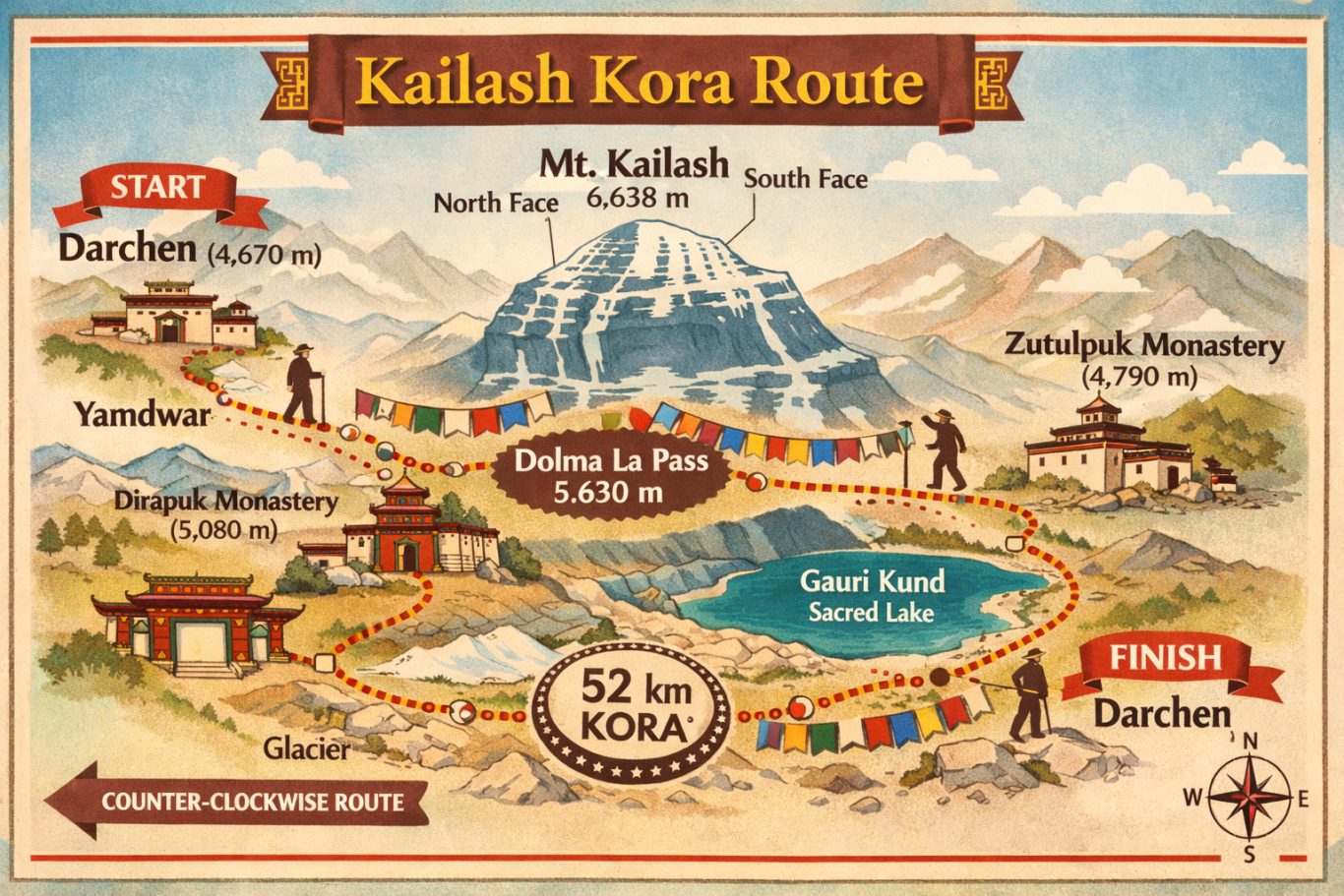
The Kailash Kora is a 52-kilometre circumambulation route around Mount Kailash. Pilgrims walk it clockwise — the direction prescribed in Tibetan Buddhism — over three days, beginning and ending at Darchen. The route crosses the Dolma La Pass at 5,636 metres, the highest point of the trek, and passes the sacred lake Gauri Kund.
Completing the Kailash Kora during Saga Dawa is considered among the most meritorious acts a Tibetan Buddhist can perform. Some devoted pilgrims perform full prostrations around the entire route — a practice that takes weeks. During the Year of the Horse in the Tibetan calendar, completing the Kora once is believed to equal the merit of thirteen standard circumambulations.
Darchen, the base camp town for Kailash trekking, provides guesthouses, basic meals, and equipment for trekkers. Altitude at Darchen sits at approximately 4,575 metres, which demands acclimatisation before beginning the Kora.
Lake Manasarovar: Sacred Bathing and Ritual
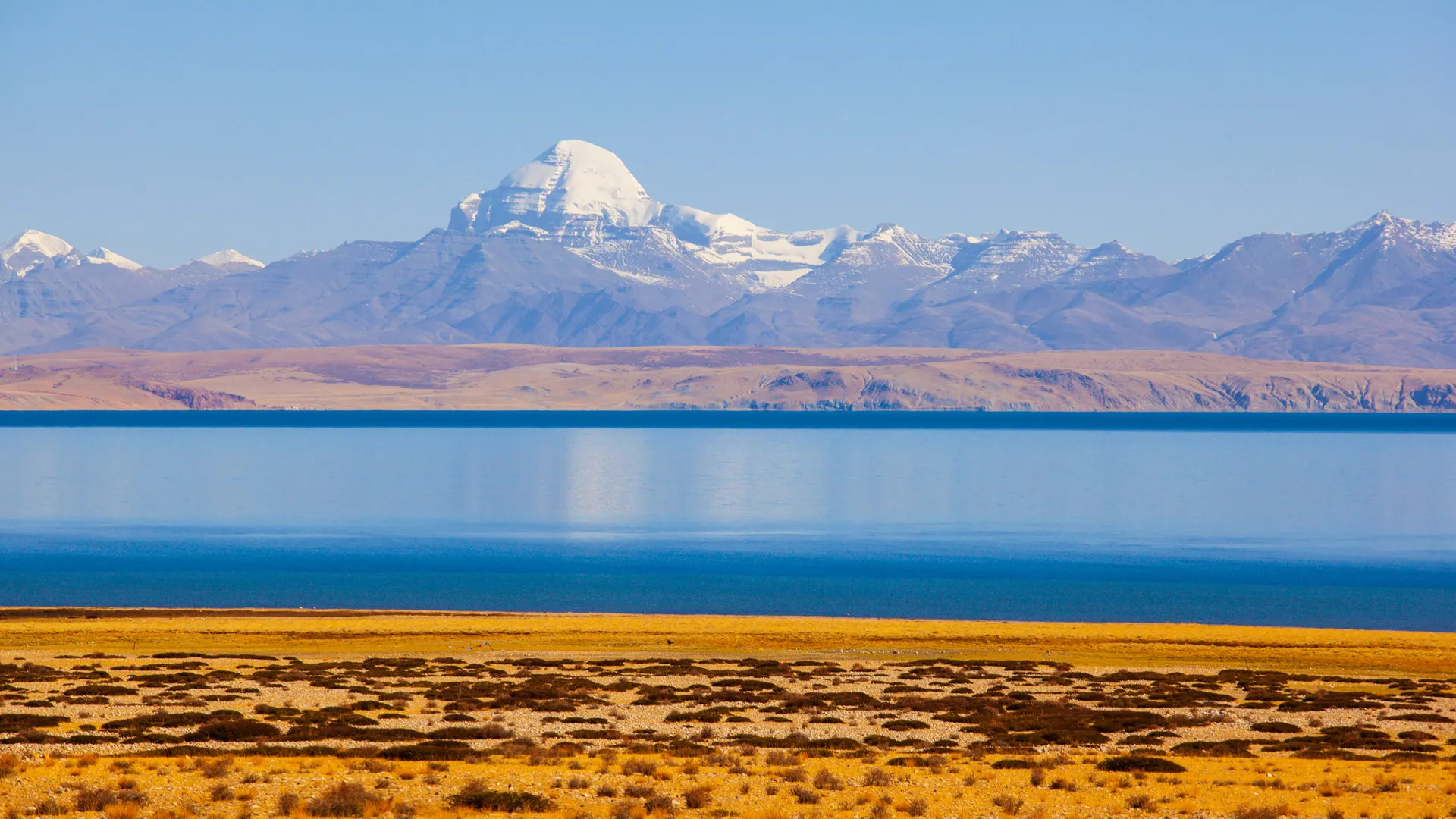
Lake Manasarovar — also written Mansarovar — lies at 4,590 metres above sea level, approximately 30 kilometres from Mount Kailash. It is one of the highest freshwater lakes in the world. In both Tibetan Buddhist and Hindu traditions, Manasarovar’s waters are held to purify karma. Pilgrims bathe in the lake, drink its waters, and perform rituals at its shores during Saga Dawa.
Tibetan Buddhist ritual at Manasarovar includes reciting sutras, chanting Om Mani Padme Hum, and releasing fish — an act of compassion that aligns with the festival’s emphasis on Buddhist values including kindness and generosity. The lake circuit (Kora around the lake) takes approximately three days on foot.
The combination of Kailash and Manasarovar constitutes the Kailash Mansarovar Yatra — a pilgrimage route that draws tens of thousands of practitioners annually, with numbers peaking sharply during Saga Dawa month.
Lhasa: City Celebrations, Monasteries, and the Potala Palace
In Lhasa, Saga Dawa produces one of the city’s most visually and spiritually intense periods. The Jokhang Temple — the holiest temple in Tibetan Buddhism, located in the Barkhor district — draws constant streams of devotees who circle it clockwise, spin prayer wheels, and offer prayers and butter lamps. The Barkhor circuit around the Jokhang is itself a Kora route, lined with incense smoke and the sound of chanting.
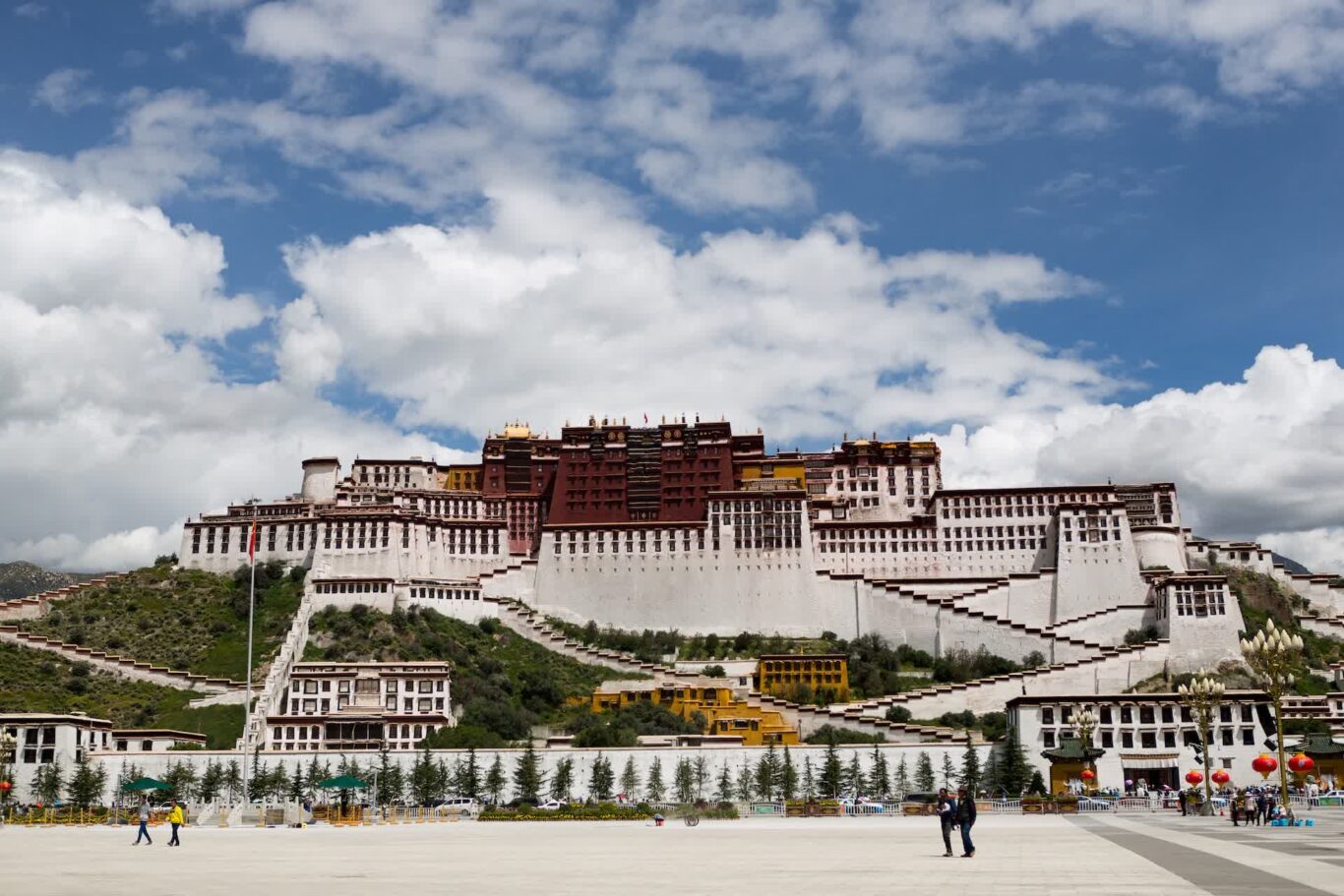
The Potala Palace, the former winter residence of the Dalai Lamas rising above Lhasa on Marpo Ri hill, takes on heightened spiritual significance during Saga Dawa. Devotees visit to make offerings and circumambulate its base.
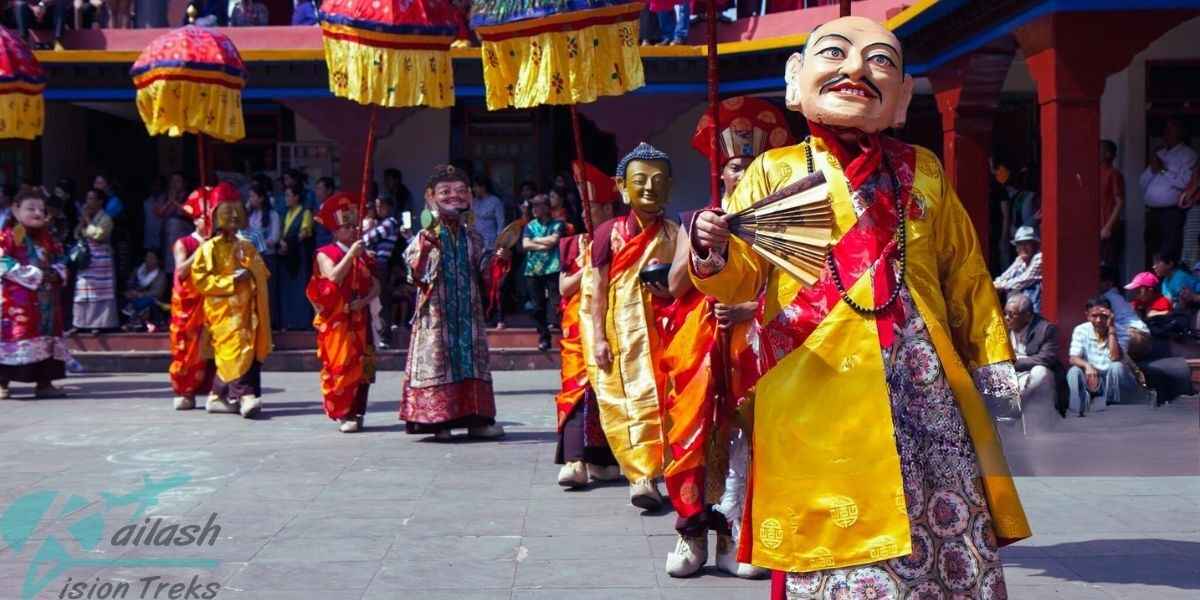
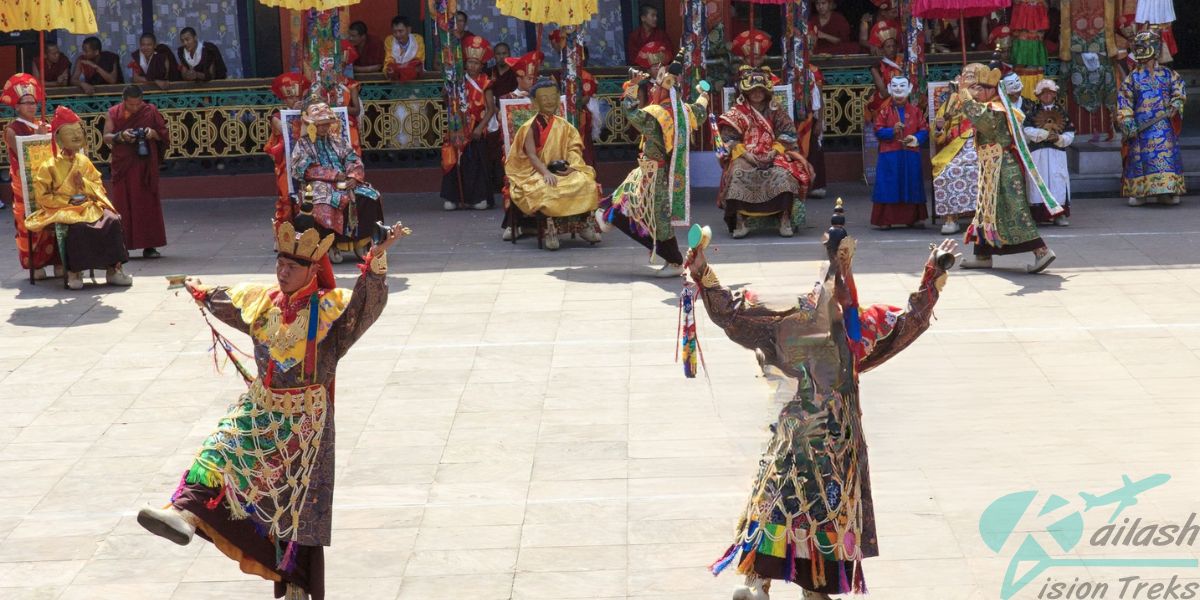
Sera Monastery and Drepung Monastery — two of the three great Gelug monasteries of Tibet — host Cham dances during Saga Dawa. These are ritual performances in which monks dress in elaborate masks and costumes to depict stories from Buddhist tradition. Ganden Monastery, the third great Gelug institution, also marks the festival with ceremonies and processions. Tashilhunpo Monastery in Shigatse — the seat of the Panchen Lama — conducts its own observances.
Smaller monastery celebrations occur at Samye, the first Buddhist monastery established in Tibet, and at sites associated with Guru Rinpoche (Padmasambhava), the Indian master credited with establishing Vajrayana Buddhism on the Tibetan Plateau.
Rituals and Observances During Saga Dawa Month
Butter Lamps: Lighting and Significance
Lighting butter lamps — traditionally made from yak butter — is one of the central acts of Saga Dawa devotion. Butter lamps represent the dispelling of ignorance and darkness through wisdom. Temples, monasteries, and private households light them throughout the month, with the greatest concentration on the fifteenth day.
Visitors to Lhasa’s Jokhang Temple during Saga Dawa will see hundreds of butter lamps burning in rows on stone altars. Pilgrims pay to have lamps lit in their name or in the name of deceased family members. The act is understood to accumulate merit for the lamp-lighter and to benefit sentient beings more broadly.
Prayer Flags: Hanging, Meaning, and the Wind’s Role
Prayer flags carry printed mantras — most commonly Om Mani Padme Hum — and are hung at high points where wind will carry the blessings outward. During Saga Dawa, pilgrims hang fresh prayer flags at mountain passes, monastery rooftops, the Tarboche flagpole site, and along the Kailash Kora trail. The wind activates the flags, spreading merit into the surrounding landscape and atmosphere.
Lungta (wind horse) flags are the horizontal square or rectangular flags strung on lines. Darchor flags are the vertical prayer flags attached to poles. Both appear throughout Saga Dawa celebrations.
Circumambulation: Kora as Active Prayer
Circumambulation — walking clockwise around a sacred site, object, or mountain — is the active devotional practice that defines Saga Dawa more than any other. The logic of the Kora in Tibetan Buddhism is that the physical movement of the body, aligned with mental focus and verbal chanting, produces a complete spiritual practice. Mind, speech, and body act together.
Devotees circumambulate the Jokhang Temple, the Potala Palace, and individual monasteries throughout Lhasa. At Kailash, the full Kora takes three days. Shorter circumambulations of stupas and temples take minutes. The act itself — not the duration — carries the merit. During Saga Dawa, that merit is multiplied.
The Eight Mahayana Precepts
Tibetan Buddhists who observe the Eight Mahayana Precepts during Saga Dawa commit to a strict code of conduct for the day. The precepts include: abstaining from killing, stealing, sexual conduct, lying, intoxicants (alcohol, tobacco, drugs), eating after noon, sitting on high or luxurious seats, and engaging in activities such as singing, dancing, wearing jewelry, and using perfume or makeup. Practitioners also avoid eating meat, garlic, onions, and radishes.
The precepts are traditionally taken in the morning and held until the following morning. During Saga Dawa month, many Tibetans observe them on every full and new moon day, and some maintain them for the entire month.
Charity, Alms, and Generosity
Giving food, money, and essential items to monks, nuns, and people in need is one of the most direct ways to accumulate merit during Saga Dawa. Tibetan Buddhists understand charity as an expression of compassion — a core value in Mahayana Buddhism — and as a practice that disrupts attachment and pride. During the festival month, donation ceremonies at monasteries and feeding of pilgrims draw community participation.
Releasing fish into rivers and lakes — particularly at Manasarovar and the Lhasa River — is a widely observed act of compassion. The logic is direct: freeing living beings from death and the cycle of suffering generates positive karma.
Conduct for Visitors During Saga Dawa
Saga Dawa is a deeply observed religious period. The following conduct guidance applies to all visitors — tourist and pilgrim alike.
Dress modestly. Cover shoulders and knees when visiting temples and monasteries. Remove shoes before entering. Attire should reflect respect for the sanctity of the sites.
Avoid alcohol and meat. Many restaurants in Lhasa reduce or suspend meat and alcohol service during Saga Dawa. Visitors who consume these items should do so discreetly and away from sacred sites and practicing devotees.
Walk clockwise. At all sacred sites — temples, stupas, the Barkhor circuit, the Kailash Kora — movement must be clockwise. Walking counter-clockwise is considered disrespectful.
Do not kill insects or animals. The prohibition on killing extends to any living being during this period in Tibetan Buddhist belief.
Do not fish or hunt. These activities are entirely inconsistent with the festival’s values and are prohibited in the areas surrounding sacred lakes and mountains.
Ask before photographing. Some rituals, particularly inside monasteries during Cham dances and prayer ceremonies, prohibit photography. Check before raising a camera.
Observe silence during ceremonies. Monastic processions and sutra recitations require quiet. Enter and exit quietly and avoid disrupting the ritual space.
Diet During Saga Dawa: What to Eat
Tibetan culture during Saga Dawa favours vegetarian food. The typical Tibetan diet during the festival includes tsampa (roasted barley flour, the staple grain of the Tibetan Plateau), butter tea, momos (steamed or fried dumplings, prepared without meat), thukpa (noodle soup), rice, yogurt, dried fruit, nuts, root vegetables, and fresh fruit. Breakfast commonly includes tsampa porridge and butter tea. Snacks include dried fruit and nuts.
Most restaurants in Lhasa, Shigatse, Gyantse, Tingri, and Darchen offer vegetarian options. Visitors planning to trek the Kailash Kora should carry sufficient high-energy snacks — dried fruit, nuts, tsampa, and energy bars — as food availability on the trail is limited. Garlic and onions, while common in Tibetan cooking, are avoided by practitioners observing the Eight Mahayana Precepts.
Travel Planning: Permits, Routes, and Logistics
Tibet Travel Permit and Chinese Visa
All foreign visitors to Tibet require a Tibet Travel Permit in addition to a Chinese visa. The permit must be arranged through a licensed Tibet travel agency — independent travel in Tibet without a licensed guide and organised tour is not permitted under current regulations. The permit process typically takes five to ten working days. Applications must be submitted before arriving in China.
Additionally, travel to restricted areas including Mount Kailash, Ngari Prefecture, and Everest Base Camp (EBC) requires a Military Permit (also called the Alien’s Travel Permit). This permit is obtained through the travel agency and processed in Lhasa.
Entry Routes: Gyirong and Lhasa
The main entry points for international travellers are Lhasa (by flight from mainland Chinese cities or by Qinghai-Tibet Railway) and the Gyirong border crossing from Nepal. Gyirong is the land crossing used by travellers arriving from Kathmandu, Nepal. Flights into Lhasa Gonggar Airport connect from Beijing, Chengdu, Shanghai, Xi’an, and other mainland hubs.
Travellers planning the Kailash Mansarovar pilgrimage from Nepal typically cross at Gyirong, drive to Darchen via Saga County and Shigatse, complete the Kailash Kora, and exit back through Gyirong or continue through Lhasa.
Route Overview: Lhasa to Kailash
A standard Saga Dawa pilgrimage circuit from Lhasa to Mount Kailash covers the following route: Lhasa — Gyantse — Shigatse — Tingri — Saga — Darchen (Kailash base camp) — Manasarovar — return via the same route or Gyirong exit. This journey takes approximately 12 to 16 days including the three-day Kailash Kora and sightseeing in Lhasa, Gyantse, and Shigatse.
Sightseeing highlights along the route include: Potala Palace, Jokhang Temple, Barkhor, Sera Monastery, Drepung Monastery (Lhasa); Pelkor Chöde Monastery and the Gyantse Kumbum (Gyantse); Tashilhunpo Monastery (Shigatse); Everest Base Camp at Tingri; and the Guge Kingdom ruins in western Tibet.
Altitude, Acclimatisation, and Health
The Tibetan Plateau sits at an average elevation above 4,000 metres. Lhasa is at 3,650 metres. Darchen (Kailash base camp) is at 4,575 metres. Dolma La Pass on the Kailash Kora reaches 5,636 metres.
Acclimatisation is essential. Spend at least two to three full days in Lhasa before travelling to higher elevations. Common symptoms of altitude sickness (acute mountain sickness) include headache, nausea, fatigue, and shortness of breath. Diamox (acetazolamide) is widely recommended by travel medicine physicians for altitude sickness prevention — consult a doctor before travel.
Stay hydrated. Drink frequently. Avoid alcohol during the acclimatisation period. UV radiation at high altitude is intense — carry SPF 50 sunscreen, UV-protection sunglasses, and a hat. Temperatures on the Tibetan Plateau fluctuate sharply between day and night. A high-quality down jacket is essential even in June.
Group Size, Cost, and Booking Timeline
Tibet tours during Saga Dawa operate as organised group tours or small group tours. Independent travel is not available. Most licensed Tibet travel agencies offer small group departures (typically 4 to 12 people) and private tour arrangements. Costs vary based on group size, route length, and accommodation standard.
Book early. Saga Dawa is peak season for Tibet travel. Permits sell out weeks in advance of the full moon. Contact a licensed Tibet travel agency at minimum two to three months before your intended departure date to guarantee permits, vehicle bookings, and accommodation. Accommodation in Darchen, Tingri, and along the western Tibet route is limited — early booking is critical.
Why Saga Dawa Matters: Spiritual Merit and the Tibetan Calendar
The Tibetan lunar calendar governs the rhythm of religious life on the plateau. Saga Dawa month — the fourth Tibetan lunar month — is not a single festival day but a month-long period of intensified practice. The full moon day (the fifteenth day) is the peak. But the entire month carries elevated spiritual significance.
In Tibetan Buddhist understanding, karma operates continuously. Every action — physical, verbal, mental — produces consequences that shape future experience and future lives. The cycle of rebirth continues until karma is fully purified and wisdom is fully developed. Practices that accumulate merit — generosity, prayer, circumambulation, sutra recitation, observance of precepts — directly address the karma that drives the cycle of rebirth.
Saga Dawa is the month in which those practices carry their greatest weight. For a Tibetan Buddhist, no other period in the year offers the same concentration of opportunity to purify karma, accumulate merit, and deepen devotion. This is why Tibetans, whether in Lhasa or Darchen or at Tarboche, gather in their thousands. It is also why international pilgrims and travellers make the considerable logistical effort to reach Tibet during this specific window.