
Introduction
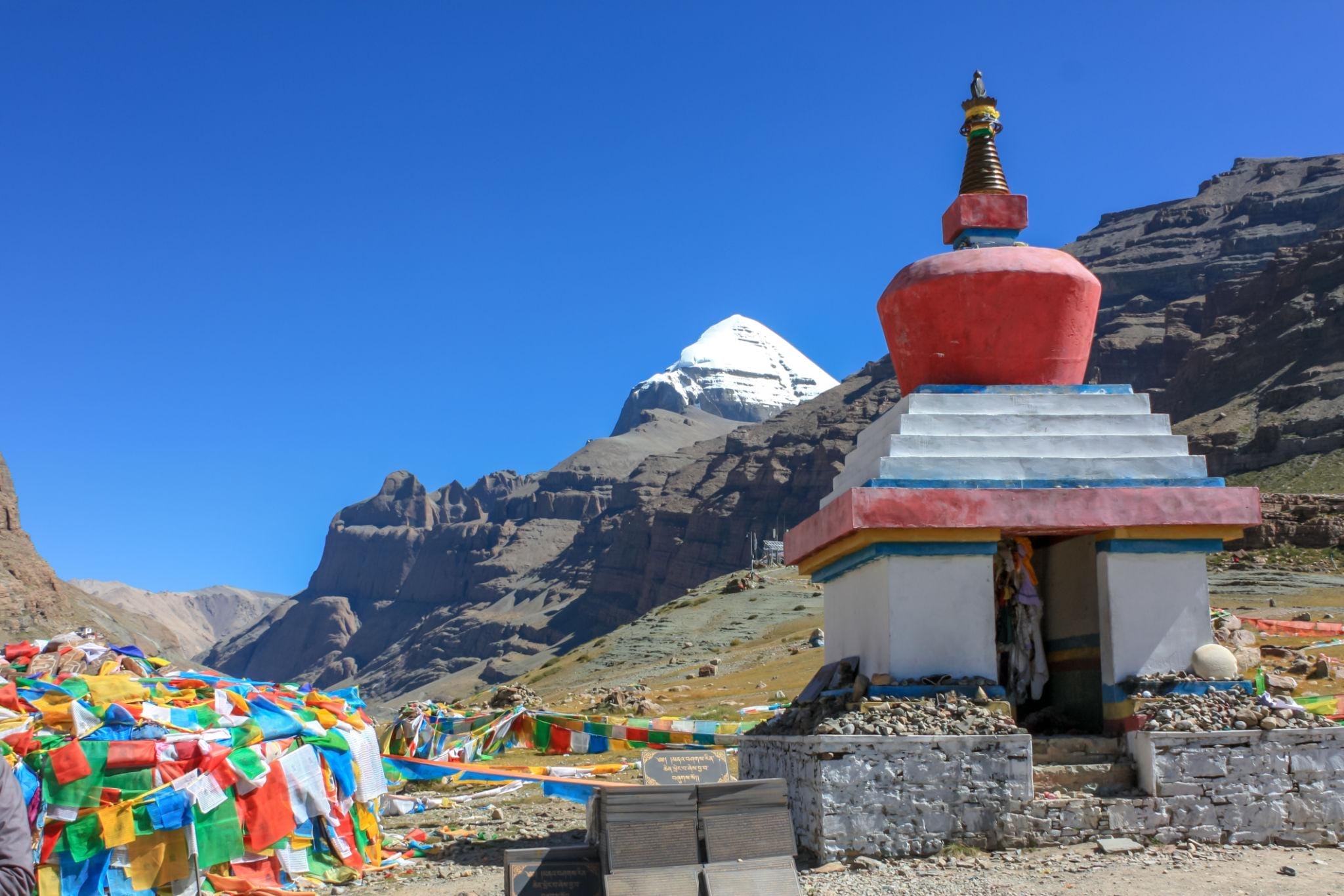
The Kailash Kora is the 52-kilometre pilgrimage circuit around Mount Kailash (6,638 m) in the Ngari Prefecture of Western Tibet, China. Pilgrims from Hindu, Buddhist, Jain, and Bon traditions walk this sacred route to complete a ritual circumambulation (parikrama) of the mountain. For many travellers, the Kora forms the central experience of the Kailash Mansarovar Yatra.
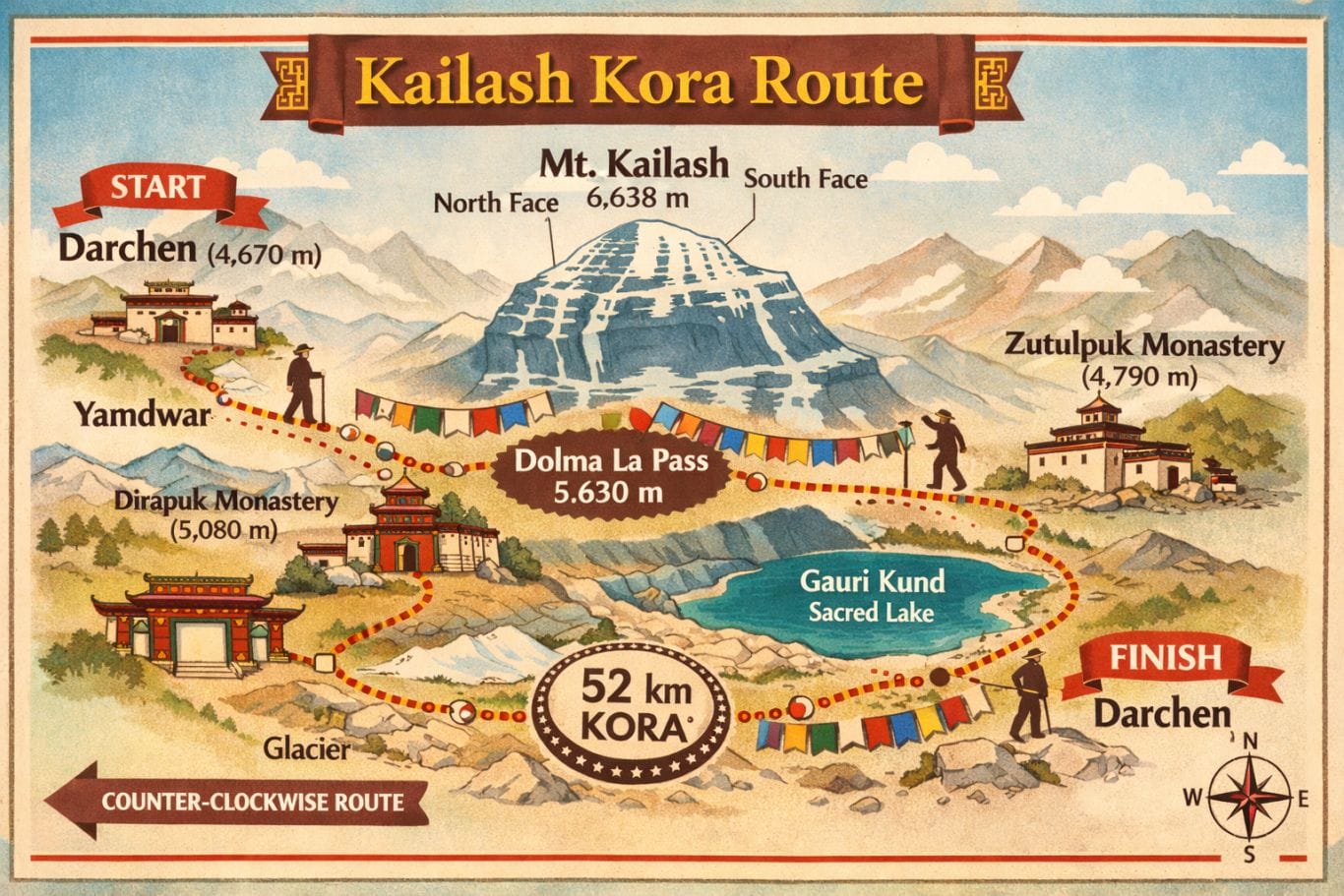
The trek begins in Darchen (4,670 m) and passes through Yam Dwar, Dirapuk Monastery, Dolma La Pass (5,630 m), Gauri Kund, and Zutulpuk Monastery before returning to Darchen. Along the route, travellers encounter high-altitude terrain, glacial valleys, prayer flag fields, Tibetan monasteries, and views of Mount Kailash’s north and south faces.
Travellers choose organised Kailash Kora trekking packages because the journey requires permits, Tibetan travel documentation, altitude planning, accommodation coordination, and experienced local guides. A structured itinerary helps travellers move safely through remote Himalayan terrain while respecting the cultural and religious practices surrounding the mountain.
Key Takeaways
- Kailash Kora is a 52-kilometre pilgrimage route that circles Mount Kailash in Tibet, one of the most sacred mountains in Asia.
- The trek begins and ends in Darchen, the main base camp town for the Kailash Mansarovar Yatra.
- The highest point is Dolma La Pass (5,630 m), a demanding but significant section of the pilgrimage.
- Travellers pass key landmarks including Yam Dwar, Dirapuk Monastery, Gauri Kund, and Zutulpuk Monastery.
- Proper preparation includes physical training, altitude acclimatization, trekking gear, and travel permits.
- Licensed tour operators arrange permits, transport, accommodation, guides, and logistical support.
- The trek offers direct exposure to Tibetan Buddhist culture, monasteries, rituals, and local cuisine.
The Spiritual Significance of Kailash Kora
The Kailash Kora pilgrimage carries deep meaning for several religious traditions.
In Hindu belief, Mount Kailash is the abode of Lord Shiva. Walking the Kora honours the divine presence of Shiva and Parvati. Completing one circuit is believed to cleanse past actions and renew spiritual commitment.
For Tibetan Buddhists, the mountain represents Mount Meru, the centre of the universe in Buddhist cosmology. Pilgrims walk the route while reciting prayers and spinning prayer wheels.
Followers of the Bon religion, Tibet’s ancient spiritual tradition, also perform the Kora but walk the circuit counter-clockwise according to Bon practice.
Jain tradition connects Mount Kailash to Rishabhadeva, the first Jain Tirthankara, who attained liberation in this region.
During the pilgrimage, travellers encounter:
- Prayer flags and prayer wheels
- Pilgrims performing full-body prostrations
- Monastery rituals and chanting
- Sacred sites such as Yam Dwar and Gauri Kund
These cultural and religious elements define the experience of the Kailash Mansarovar pilgrimage route.
Essential Preparation for Your Kailash Kora Trek
The Kailash Kora trek takes place in high-altitude Himalayan terrain, where preparation directly affects safety and comfort. Travellers should address physical fitness, altitude readiness, and trekking equipment before departure.
Physical conditioning
Participants should prepare several weeks in advance.
Recommended preparation includes:
- Cardiovascular training such as hiking, stair climbing, and cycling
- Leg strength training to handle steep ascents and descents
- Endurance walking with a loaded backpack
These activities prepare the body for multi-day trekking above 4,500 m.
Altitude acclimatization
Altitude presents the most common challenge during the Kora.
Travellers must allow time for the body to adjust to reduced oxygen levels. Proper itineraries include acclimatization days in Kathmandu or Tibet before reaching Darchen. Guides monitor travellers for symptoms of acute mountain sickness (AMS).
Essential trekking gear
Travellers should carry equipment suitable for high-altitude trekking conditions:
- Waterproof trekking boots with ankle support
- Layered thermal clothing
- Down jacket and windproof shell
- Sun protection (hat, sunglasses, sunscreen)
- Hydration bottles or hydration bladder
- Trekking poles
- Personal medical kit
Reliable gear helps travellers maintain comfort across rocky trails, glacial sections, and mountain passes.
Cultural Insights During Kailash Kora
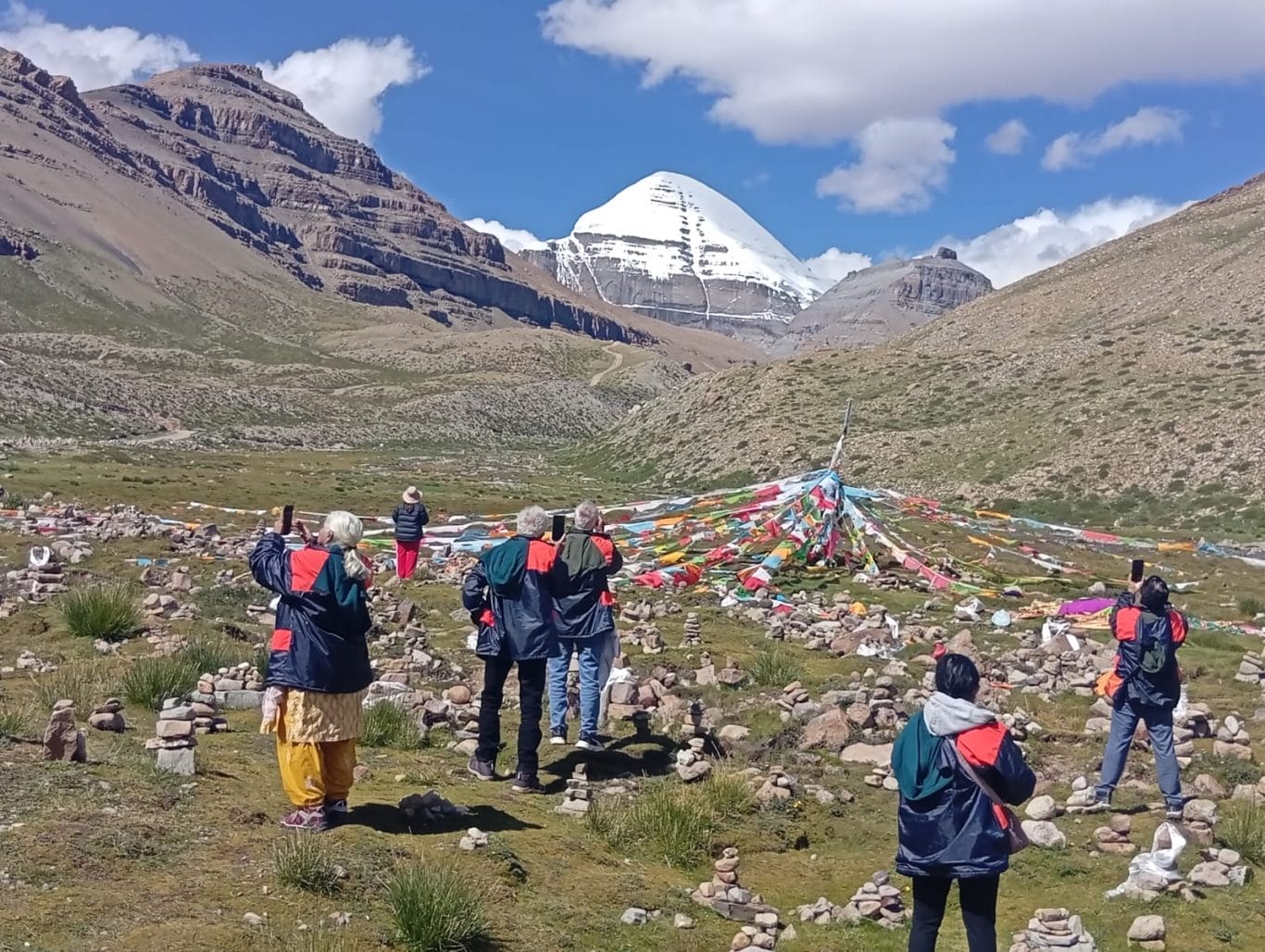
The Kailash Kora pilgrimage also introduces travellers to Tibetan culture and Himalayan traditions. These experiences occur naturally along the route and in nearby settlements.
Tibetan religious practices
Travellers often witness:
- Pilgrims performing prostration circuits
- Monks conducting prayer ceremonies
- Mani stones carved with sacred inscriptions
- Prayer flags marking mountain passes
These practices reflect the living religious traditions of Tibet.
Local food and hospitality
Along the route, guesthouses and camps serve simple Tibetan and Himalayan dishes, including:
- Momos (dumplings)
- Thukpa (noodle soup)
- Butter tea
- Tsampa (roasted barley flour)
Meals provide the calories required for high-altitude trekking.
Cultural interaction
Travellers frequently meet:
- Tibetan pilgrims walking the full circuit
- Local yak herders transporting supplies
- Monks and caretakers at monasteries
These encounters provide direct insight into daily life on the Tibetan Plateau.
How to Navigate the 52-Kilometer Kailash Kora Route?
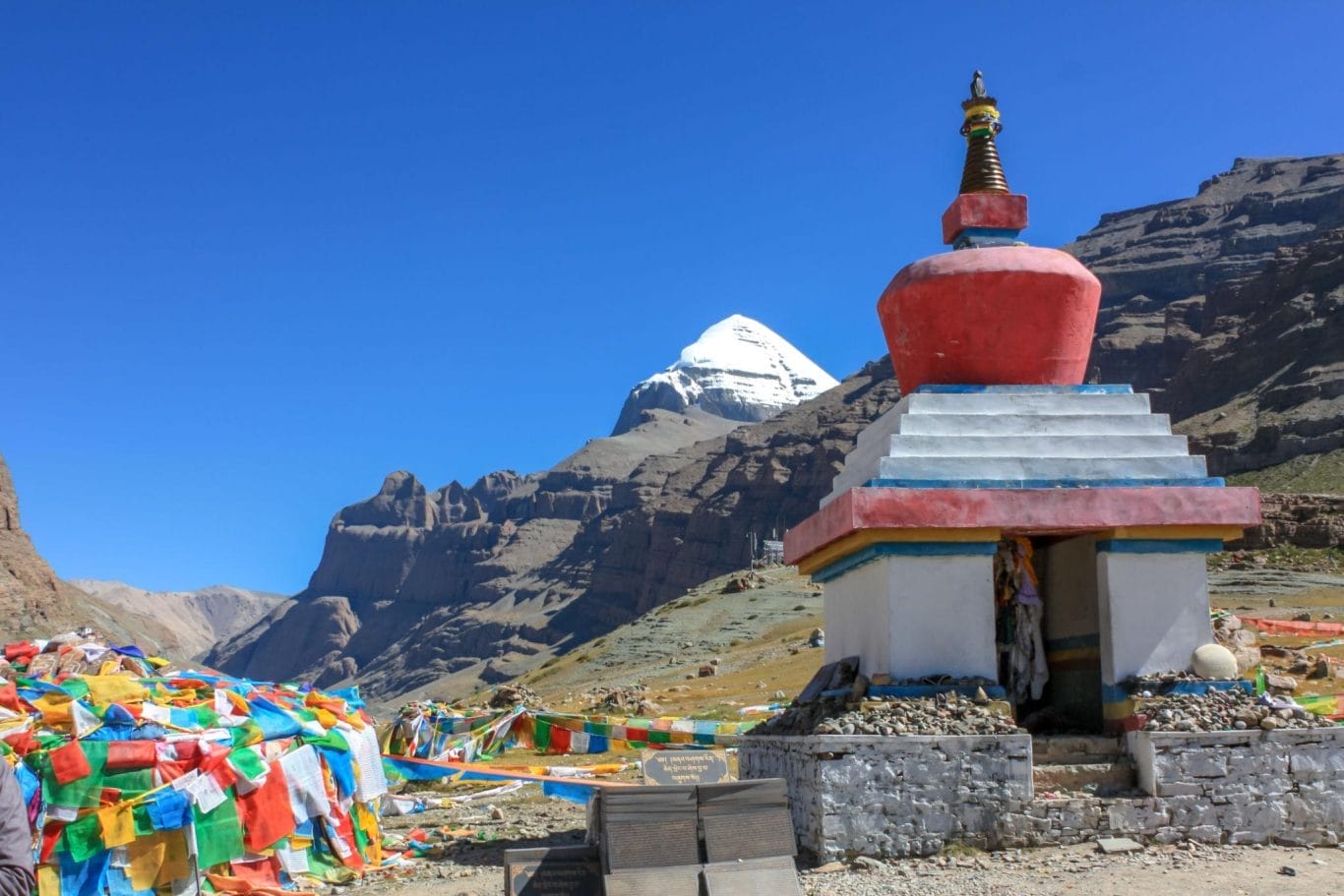
The Kailash Kora route is typically completed over three trekking days, although some pilgrims complete it in a single day. Most organised itineraries follow the traditional three-day circuit for safety and altitude management.
Best Starting Point
The trek begins in Darchen, the official starting point of the Kailash Kora.
Darchen serves as:
- Base camp for Mount Kailash pilgrims
- Permit checkpoint and logistics centre
- Accommodation hub before and after the trek
From Darchen, travellers reach Yam Dwar, the ceremonial gateway that marks the spiritual beginning of the Kora.
The route continues through key sections:
Day 1: Darchen → Dirapuk Monastery
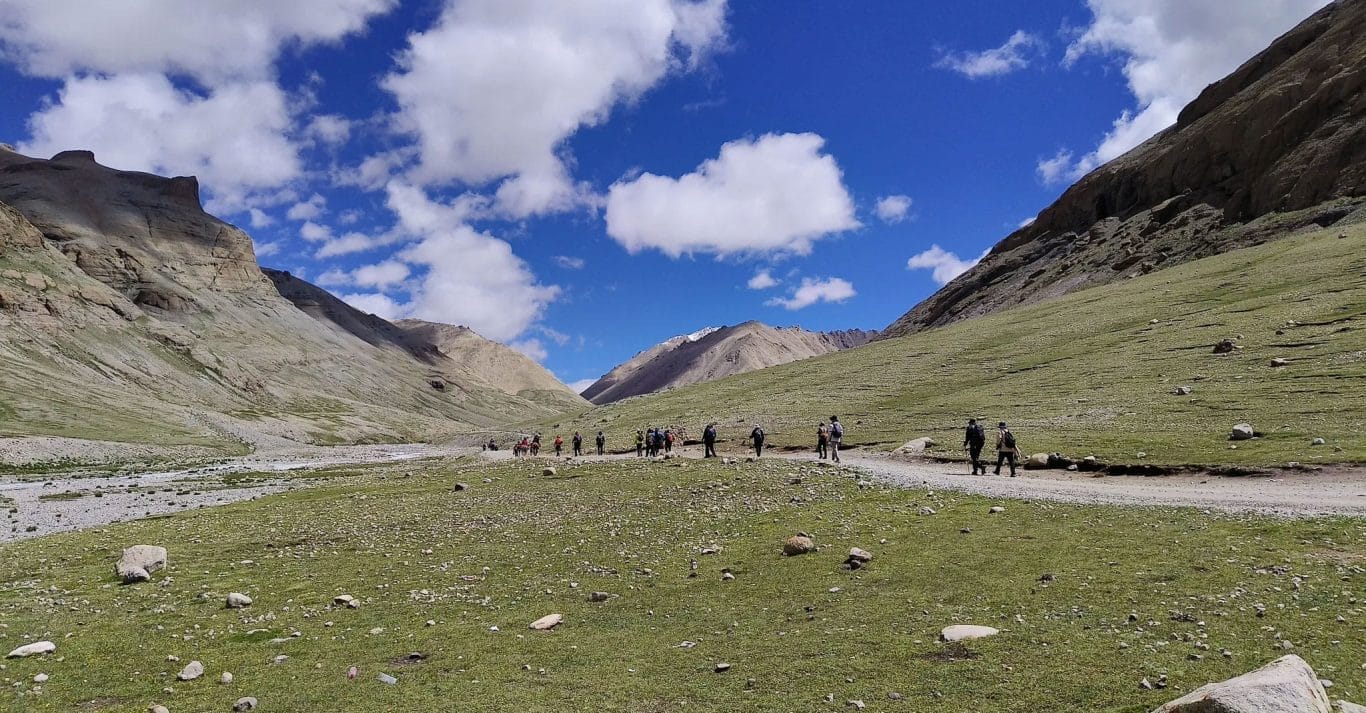
Travellers follow the Lha Chu Valley while viewing the north face of Mount Kailash.
Day 2: Dirapuk → Dolma La Pass → Zutulpuk Monastery
This is the most demanding section. Trekkers cross Dolma La Pass (5,630 m) and descend past Gauri Kund, a sacred lake.
Day 3: Zutulpuk → Darchen
The final section follows a gradual valley route back to the starting point.
Essential Packing List
Travellers should carry equipment that supports high-altitude trekking and variable mountain weather.
Recommended items include:
- High-quality trekking boots
- Thermal base layers
- Insulated jacket
- Waterproof outer shell
- Gloves and warm hat
- Headlamp
- Reusable water bottles
- Energy snacks
- Trekking poles
- Personal medications
Packing efficiently reduces physical strain while ensuring access to essential gear during the trek.
Top 10 Tips for a Successful Kailash Kora Pilgrimage
Preparation and awareness help travellers complete the Kailash Kora safely and respectfully.
- Follow a structured itinerary that includes altitude acclimatization.
- Walk at a steady pace to conserve energy at high altitude.
- Drink water regularly to reduce dehydration risks.
- Eat frequent meals to maintain energy levels.
- Wear layered clothing to handle changing temperatures.
- Carry trekking poles for stability on rocky sections.
- Listen to your guide’s instructions during difficult sections.
- Respect local customs and sacred sites along the route.
- Monitor altitude symptoms such as headaches or dizziness.
- Prepare travel permits and documentation in advance.
Following these steps helps travellers complete the Kailash pilgrimage circuit with greater safety and comfort.
Reflections and Insights After Your Kailash Kora Experience
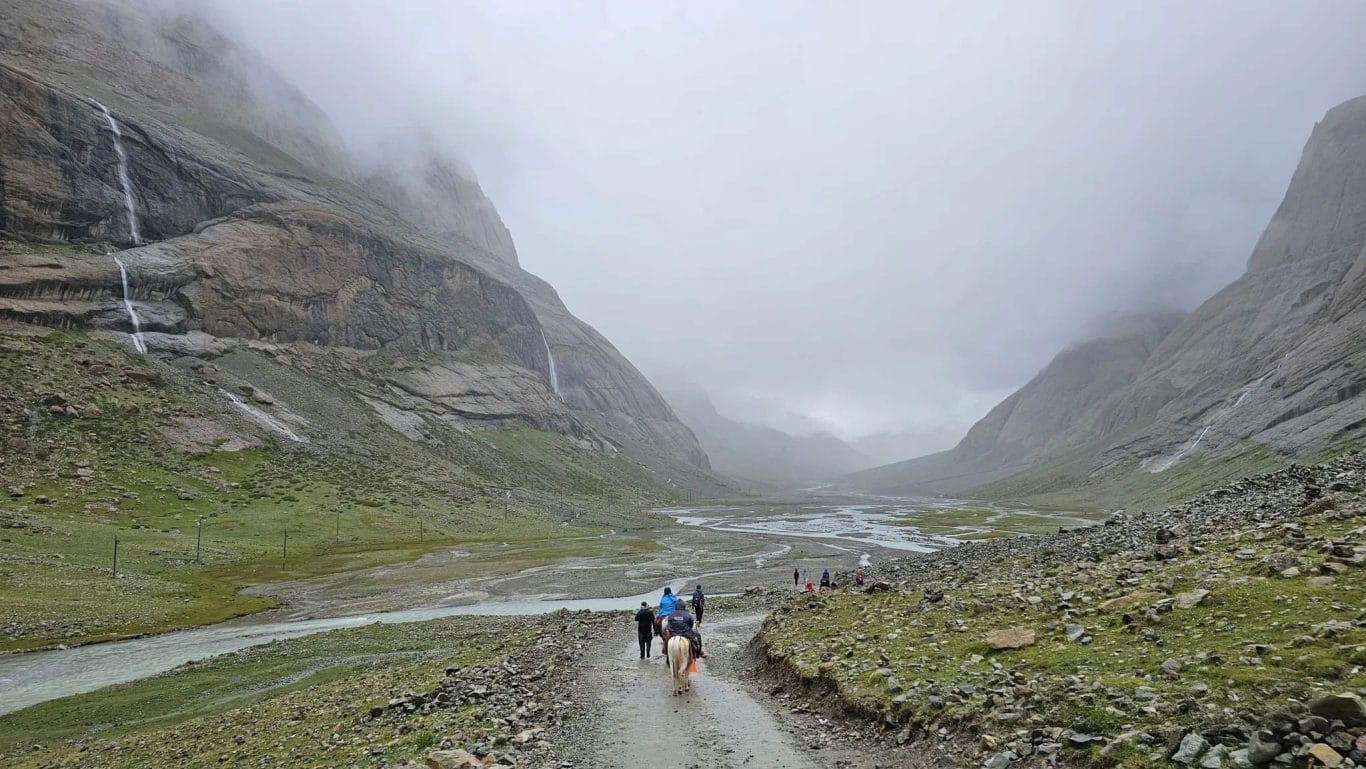
Completing the Kailash Kora trek often leaves travellers with a strong sense of achievement. The journey combines high-altitude trekking, cultural immersion, and spiritual tradition in one of the most remote regions of the Himalayas.
Many travellers report:
- Greater appreciation for Tibetan religious culture
- Stronger personal resilience after crossing Dolma La Pass
- A deeper understanding of the significance of Mount Kailash in Asian spirituality
The experience also creates a lasting connection to the Kailash Mansarovar pilgrimage route, which has drawn travellers and pilgrims for centuries.