
Introduction
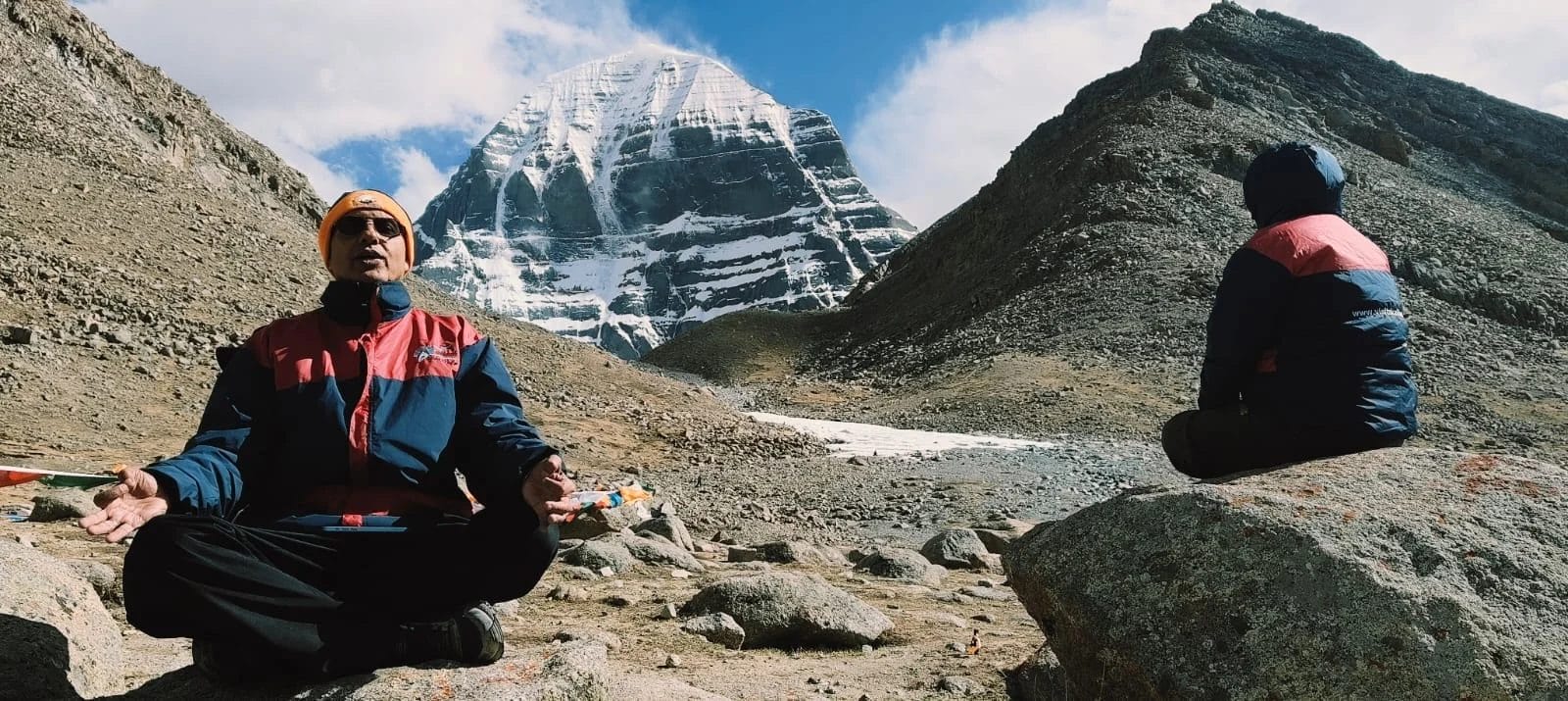
Charan Sparsh is the Hindu act of touching the feet of a sacred figure as an expression of devotion and submission. At Mount Kailash, the 6,638-metre peak located in Tibet’s Ngari Prefecture, it means physically touching the base of the mountain’s North Face — the charan, or feet, of the mountain itself. Devotees believe direct contact with the rock at Kailash’s foot transmits the flow of energy from Lord Shiva — the divine — into the human body, and that the exchange of energy between the pilgrim and the sacred mountain dissolves accumulated karmic burdens.
This matters in practical terms because Charan Sparsh is not a separate yatra or add-on tour. It is a ritual moment that occurs on Day 2 of the Kailash Kora — the 52-kilometre circumambulation (parikrama) of Mount Kailash — during the Kailash Mansarovar Yatra. Pilgrims walk from the overnight camp at Dirapuk, approximately 4 to 6 kilometres to the North Face and back, perform the ritual, then continue toward Dolma La Pass later that same day. Understanding that sequence is what makes the rest of this page useful.
This blog covers what Charan Sparsh is and what it is not, where precisely it takes place on the kora route, how the full yatra itinerary is structured around it, what physical condition and permits it requires, and what a standard Kailash Mansarovar Yatra tour package provides for this sacred pilgrimage.
What Charan Sparsh Is — and What It Is Not
The Ritual and Its Spiritual Significance
Charan Sparsh comes from the Sanskrit charan (feet) and sparsh (touch). In Hindu devotion, touching the feet of a deity, a guru, or a sacred place expresses humility and requests blessing. At Mount Kailash, the gesture is directed at the mountain as the physical throne of Lord Shiva — Shiva’s Parvat — and through it, at God himself.
The spiritual significance of Charan Sparsh at Kailash is held across traditions. It is believed that the mind, body, and soul of a person who touches the feet of the mountain are purified in a single moment — that the sacred vibrations radiating from Kailash pass into the devotee through direct physical contact. Hindu pilgrims undertake this as the culminating act of devotion on the kora. Tibetan Buddhist pilgrims regard Kailash as the seat of Demchok, a tantric Buddha, and completing proximity to the North Face carries ritual weight within that tradition as well. Jain pilgrims connect the mountain to Rishabhadeva, the first Tirthankara, who is said to have attained liberation here. Each tradition draws different meaning from the same physical approach, but for all of them, the walk to the mountain’s base is among the most holy moments of the pilgrimage.
The Distinction That Most People Miss
Charan Sparsh does not involve climbing Mount Kailash. The mountain has never been climbed; no mountaineering permit exists for its summit, and Chinese and Tibetan authorities prohibit any attempt out of respect for the mountain’s sacred status. The ritual stops at the foot — at the rock face and scree of the North Face at approximately 5,630 metres — not above it. Pilgrims touch the mountain, perform prayers or offerings such as flowers, rice, or incense, and return. Touching Mount Kailash at its base is the act. Ascent is not.
Where Charan Sparsh Takes Place
Dirapuk: The Departure Point
Dirapuk Monastery sits at roughly 5,000 metres on the north side of the kora route and provides the direct sightline to the northern face of Mount Kailash that makes the approach both visible and meaningful. It is the standard overnight stay after Day 1 of the parikrama. Pilgrims stay at the Dirapuk guesthouse or tented camp, and the Charan Sparsh walk to the North Face base begins from here before dawn or at first light the following morning.
The terrain between Dirapuk and the northern face is rocky, uneven, and frequently snow-covered, even in the June to September season. The round trip covers 4 to 6 kilometres depending on conditions and the exact point where the trail reaches the mountain’s base. Weather at the face of Mount Kailash changes rapidly; local guides time the walk for early morning when wind and temperature are most stable.
Darchen: Where the Kora Begins
Darchen, the small Tibetan settlement that serves as the official starting point of the Kailash Parikrama, sits at 4,575 metres at the southern base of the mountain. All pilgrims arrive at Darchen, spend one or two nights there for final acclimatization, and begin the kora from this point. Charan Sparsh does not happen at Darchen. It happens 20 kilometres into the kora, after the first day’s trek, from Dirapuk.
How Charan Sparsh Fits Into the Full Kailash Mansarovar Yatra Tour
The Two Sacred Destinations
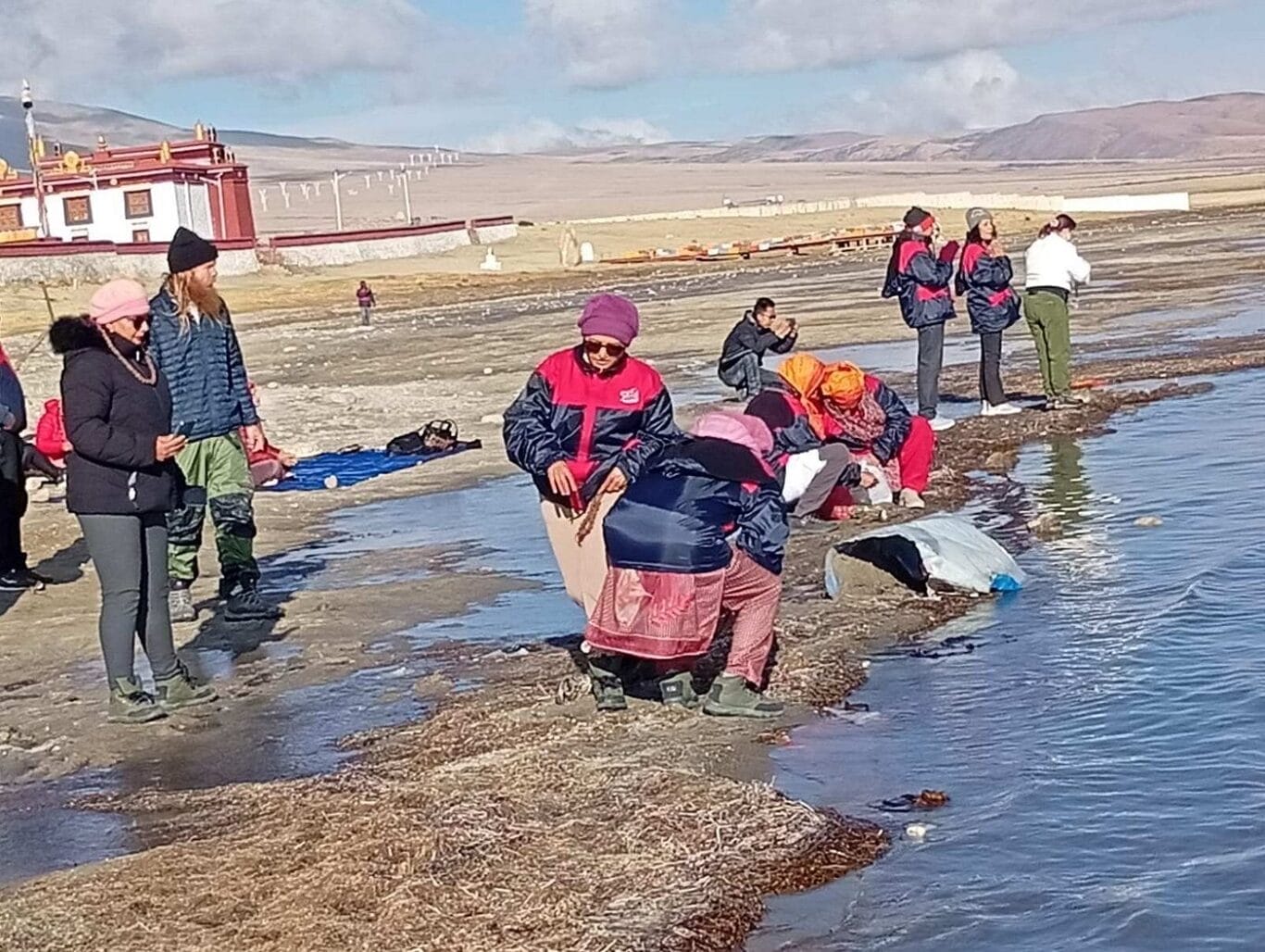
The Kailash Mansarovar Yatra is a sacred pilgrimage that combines two destinations: Lake Manasarovar and Mount Kailash. Pilgrims typically arrive at Lake Manasarovar first.
Lake Manasarovar sits at 4,590 metres and is one of the highest freshwater lakes in the world. Hindu tradition holds its waters sacred to Lord Shiva; bathing in or walking around the lake is a purification ritual performed before approaching Kailash. The lake parikrama covers roughly 88 kilometres and takes 3 to 4 days if completed on foot, though most yatra tour packages include a visit to the lake’s shores rather than the full circumambulation.
Mount Kailash Kora follows. The 52-kilometre outer parikrama takes 2 to 3 days and includes the ascent of Dolma La Pass at 5,636 metres — the highest point of the trek — and the Charan Sparsh walk to the North Face.
The Route Options
Two primary routes access the yatra:
- Nepal Route via Kathmandu: Pilgrims arrive in Kathmandu (1,400 m), travel overland into Tibet via the Gyirong Port border crossing, and proceed across the Tibetan plateau through Saga (4,640 m) toward Darchen. Total trip duration from Kathmandu is typically 14 to 18 days. This is the most common local travel route for South Asian pilgrims.
- Lhasa Route via China: Pilgrims fly into Lhasa (3,650 m), acclimatize for 2 to 3 days to experience Tibetan culture and the city before continuing, then travel overland southwest to Darchen. This route is approximately 12 to 15 days from Lhasa. Some tours on the Lhasa Everest route include a stop at Everest Base Camp (Tibet side, 5,200 m) before reaching Darchen — combining the Lhasa tour with the full Kailash Yatra tour in a single trip.
The Kora Day by Day
| Day | Route | What Happens |
|---|---|---|
| Day 1 | Darchen to Dirapuk | ~20 km trek; first clear views of Kailash North Face; overnight stay at Dirapuk |
| Day 2 (morning) | Dirapuk to North Face | Walk to mountain base; Charan Sparsh performed; return to Dirapuk |
| Day 2 (afternoon) | Dirapuk to Zutulpuk | Ascend Dolma La Pass (5,636 m); descend to Zutulpuk camp; overnight stay |
| Day 3 | Zutulpuk to Darchen | Final leg of the kora; return to starting point |
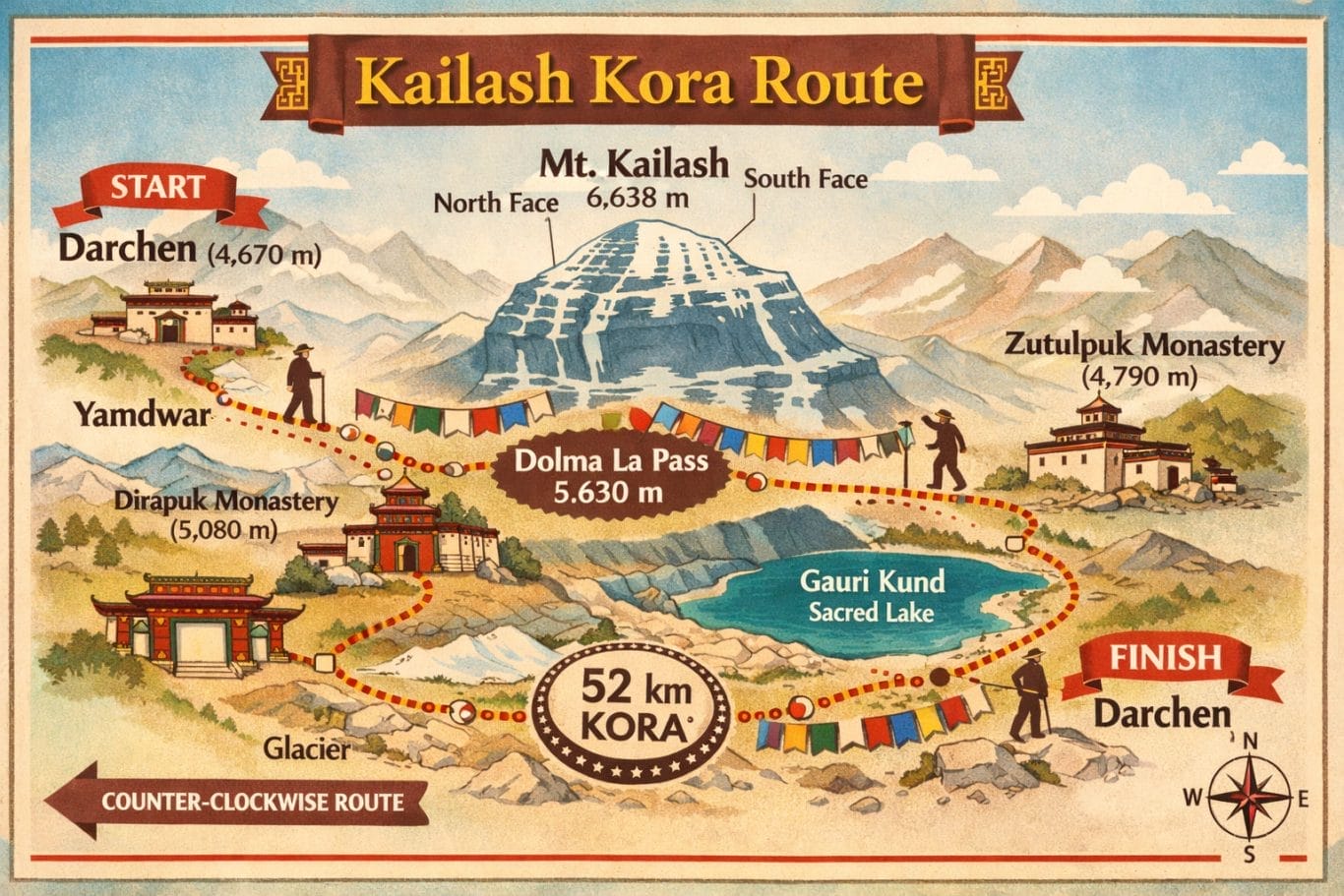
The sequencing matters. Charan Sparsh and Dolma La Pass both fall on Day 2, which is the hardest day of the kora. Pilgrims walk to the North Face and back, then immediately begin the climb toward the pass. Tour operators and Tibetan guides generally schedule the Charan Sparsh walk for 5 a.m. to 7 a.m. to allow enough time for the pass crossing before afternoon weather deteriorates.
Physical Requirements for the North Face Approach
Altitude Acclimatization
The North Face base sits at 5,630 metres (meters above sea level), where available oxygen is roughly 50% of sea-level concentration. Acute Mountain Sickness (AMS) at this elevation is not uncommon. Symptoms — headache, nausea, breathlessness, loss of coordination — can appear within hours of ascending too quickly. Severe AMS can escalate to High Altitude Pulmonary Edema (HAPE) or High Altitude Cerebral Edema (HACE), both of which require immediate descent and, in serious cases, evacuation.
The risk is manageable with proper acclimatization. A standard protocol used by licensed Kailash tour operators stages the ascent over the full journey: arrival at Kathmandu or Lhasa, then 2 to 3 nights in Lhasa, overnight stops at intermediate altitudes along the overland road (Saga at 4,640 m is a common staging point), and one to two nights in Darchen before the kora begins. Pilgrims who compress this schedule to save time increase their AMS risk significantly on the Charan Sparsh walk and the Dolma La crossing.
Diamox (Acetazolamide), a prescription medication that accelerates acclimatization, is widely used by pilgrims on this yatra. It requires a physician’s assessment before the trip. Supplemental oxygen cylinders may be carried by tour operators and are recommended for pilgrims with pre-existing cardiac or respiratory conditions.
Fitness and the Human Body at Altitude
The Charan Sparsh walk is 4 to 6 kilometres round trip over rocky, uneven terrain, at altitude, before a full day of trekking to the pass. Each person’s body responds to altitude differently; what one pilgrim finds manageable can be debilitating for another at the same fitness level. Cold temperatures near the northern face of Kailash range from 0°C to −15°C overnight, even in July and August.
A 3-month preparation programme before the yatra — daily walks of 8 to 10 kilometres, stair climbing, and general cardiovascular conditioning — is the standard recommendation from expert operators. First-time high-altitude trekkers in particular should not underestimate the combined demand of Day 2.
Clothing and Gear
Appropriate clothing can be the difference between completing the Charan Sparsh walk and turning back. The recommended layering system for the North Face approach is a moisture-wicking thermal base layer, an insulating mid-layer (fleece or down), and a waterproof and windproof outer shell. Temperatures at 5,630 metres will have dropped significantly from what pilgrims experience at Darchen, and wind at the face of Mount Kailash accelerates heat loss. Trekking boots rated for snow and scree, UV-protective sunglasses, and SPF 50 sunscreen are required.
Permits and Visa Requirements
Tibet Permits
Mount Kailash is in the Tibet Autonomous Region, administered by China. A standard Chinese tourist visa does not grant access. Three separate permits are required:
- Tibet Travel Permit (TTP): Issued by the Tibet Tourism Bureau; required for all entry into Tibet.
- Alien’s Travel Permit (ATP): Required for restricted areas including Darchen and the Kailash region specifically.
- Military Area Permit: Required for border-adjacent sections of the overland route.
Tour operators licensed to run the Kailash Yatra handle permit applications through their Tibetan agency partners. Individual permit applications are not accepted; the process runs through the operator. The permit service is included in most standard packages; confirm this before booking.
Indian pilgrims accessing Kailash via the Lipulekh Pass route — when this route is operational under the India-China bilateral agreement — travel under separate Ministry of External Affairs (MEA) registration and a group visa arrangement. This route has different operational requirements from the Nepal route and should be confirmed with the operator before booking.
Entry via Nepal
Pilgrims on the Nepal route cross into Tibet at Gyirong Port, the primary land entry point for pilgrimage groups. Indian nationals do not require a Nepal visa. Most other nationalities can obtain a Nepal visa on arrival at Tribhuvan International Airport in Kathmandu or via e-visa before travel. The China Group Visa for Tibet is arranged through the tour operator after the Nepal entry.
What a Kailash Charan Sparsh Package Provides
A standard Kailash Mansarovar Yatra tour package with Charan Sparsh will have the following services:
- Airport transfers in Kathmandu and Lhasa
- Accommodation in Kathmandu, Lhasa, and at overland route stops (hotels and guesthouses)
- Tented or guesthouse stay at Dirapuk and Zutulpuk during the kora
- Tibet-bureau-licensed Tibetan guide for the full kora
- Tibet Travel Permit, Alien’s Travel Permit, and Military Area Permit processing
- China Group Visa facilitation for Nepal-route pilgrims
- Meals during the kora days
- Porter or yak support for luggage on the parikrama (varies by operator; confirm before booking)
- Emergency oxygen cylinders and first aid kit
- Travel insurance facilitation — operators require pilgrims to hold coverage that includes high-altitude trekking and helicopter evacuation
Packages do not cover international flights to Kathmandu or Lhasa, personal trekking gear or clothing, or medical evacuation costs above what the pilgrim’s travel insurance covers.
To book a Kailash Mansarovar Yatra tour, contact us directly by email or WhatsApp. Our expert team will provide a complete itinerary, permit processing timeline, payment schedule, and answers to any questions about the yatra. We recommend reaching out at least 3 to 4 months before your intended departure date, as Tibet permit processing and group visa facilitation require lead time.
Best Time to Arrive at Kailash for Charan Sparsh
The yatra season runs May through September. The North Face approach is closed by snowfall from October to April; Dolma La Pass becomes impassable, and the Nepal-Tibet border closes for the season.
| Month | North Face Conditions |
|---|---|
| May | Possible snow on trail; fewer pilgrims; cold |
| June | Reliable trail conditions; recommended for first-time pilgrims |
| July | Pre-monsoon weather; some rain at lower altitudes |
| August | Monsoon affects the Nepal route; Tibet side stays drier; highest pilgrim numbers |
| September | Post-monsoon; clear skies; excellent visibility of Kailash; trails open |
June and September consistently draw positive feedback from pilgrims completing Charan Sparsh. June sees stable trail conditions before the monsoon reaches the plateau; September offers clear views of the North Face after the rains clear.
Frequently Asked Questions
What is Charan Sparsh at Kailash?
Charan Sparsh at Kailash is the ritual act of touching the base of Mount Kailash’s North Face. Pilgrims performing the Kailash Kora walk from the Dirapuk overnight camp to the mountain’s foot — approximately 2 to 3 kilometres — touch the rock, snow, or ground, offer prayers or items such as flowers or rice, and return. It is performed on Day 2 of the kora as an act of devotion to Lord Shiva. Devotees believe the sacred vibrations at the mountain’s base enter the body through this contact, providing blessings for the pilgrim’s mind, body, and spiritual life.
Is Charan Sparsh possible for every pilgrim?
Not always. The walk to the North Face sits above 5,600 metres. Pilgrims experiencing AMS symptoms, those with cardiac or respiratory conditions, and those who are physically exhausted from the Day 1 trek may not be able to complete it safely. Tibetan guides and tour operator staff assess each pilgrim’s condition before the walk and advise on whether to proceed. Pilgrims who do not complete the Charan Sparsh walk can still complete the full parikrama from Dirapuk.
How close can you get to Mount Kailash?
The closest accessible point to the face of Mount Kailash is the northern face base at approximately 5,630 metres, reached from Dirapuk. No approach beyond this point is permitted. Mount Kailash has never been climbed; Chinese and Tibetan authorities issue no climbing permits for it.
How many days does the Kailash Mansarovar Yatra take?
The full yatra — from Kathmandu or Lhasa, including Lake Manasarovar and the 3-day kora — runs 12 to 18 days depending on the route and itinerary. Charan Sparsh falls on Day 2 of the kora, which is roughly the midpoint of the full trip.
Can Indian pilgrims do Charan Sparsh via Nepal?
Yes. The Nepal route via Kathmandu and Gyirong Port is the standard route for Indian pilgrims. Indian nationals require no Nepal visa. The China Group Visa for Tibet is handled by the tour operator through a licensed Tibetan travel agency.
What should pilgrims carry for the walk?
- Thermal base layer, insulating mid-layer, waterproof outer shell (appropriate clothing for sub-zero wind chill)
- Trekking boots suitable for snow and rock
- Trekking poles
- Sunscreen (SPF 50 or higher) and UV-rated sunglasses
- At least 2 litres of water — dehydration at altitude accelerates AMS symptoms
- High-energy snacks
- Personal medications including any prescribed Diamox
- A ritual offering: flowers, rice, or incense
Is Charan Sparsh a religious requirement of the Kailash Yatra?
No. The required ritual act of the Kailash Yatra is the full outer kora — the 52-kilometre circumambulation. Charan Sparsh is an additional act of devotion undertaken by pilgrims who choose to walk to the northern face from Dirapuk. It is not obligatory, but it is believed among Hindu devotees that a person who succeeds in touching Mount Kailash at its base will have received the direct blessing of Lord Shiva. Many pilgrims treat it as the defining spiritual experience of the entire trip.
What are the terms and conditions for booking a Kailash Yatra tour?
Payment terms, cancellation policy, and booking conditions vary between tour operators. A standard Kailash Mansarovar Yatra tour will have a non-refundable deposit at the time of booking, with the balance due 45 to 60 days before departure. The terms conditions and privacy policy of your chosen operator govern refund eligibility in cases of permit denial, medical evacuation, or force majeure events such as border closures. Read the full terms and conditions and privacy policy before confirming your booking. Our team can walk you through these details via email or WhatsApp before any payment is made.
Conclusion
Charan Sparsh is the act of touching the sacred base of Mount Kailash’s North Face — performed during the Kailash Mansarovar Yatra on Day 2 of the Kailash Kora, from the Dirapuk camp, at approximately 5,630 metres above sea level. It is believed to be among the holiest acts a devotee can perform: a direct exchange of energy between the human body and the divine, at the feet of the mountain that Hindu tradition holds as God’s earthly throne.
Reaching the northern face requires physical preparation across at least three months before departure, a staged acclimatization schedule across the full route, Tibet Travel Permit processing through a licensed operator, and a Tibetan guide who knows the approach. For many pilgrims who arrive at Kailash, the moment of touching Mount Kailash will have been the goal of a lifetime.
The yatra season runs May to September, via Kathmandu or Lhasa, with June and September offering the most consistent conditions for the North Face walk. Contact us by email or WhatsApp to speak with our expert team, receive a full itinerary, and begin your booking.