
Introduction
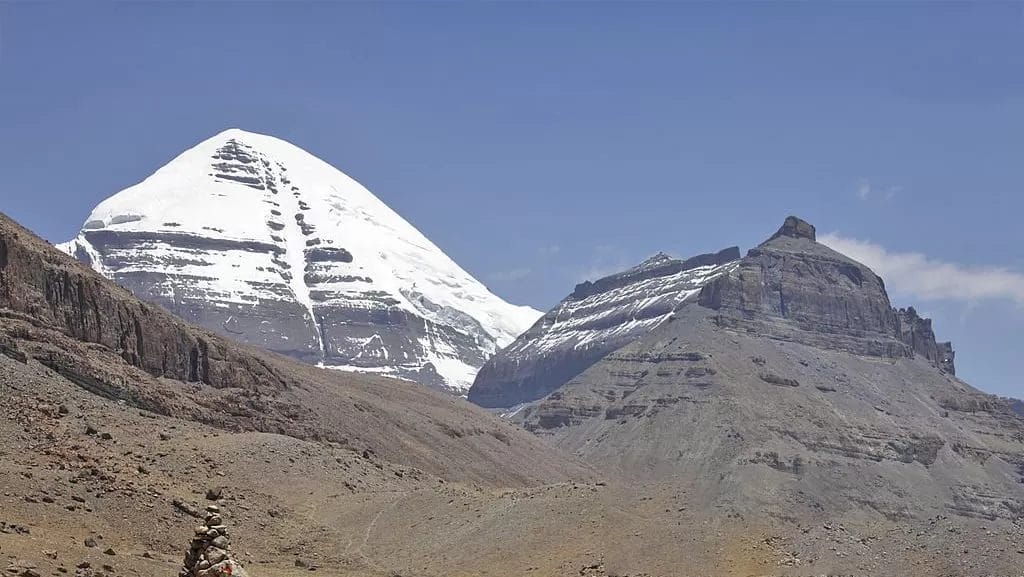
Nandi Parvat is a sacred mountain peak located at the southern approach to Mount Kailash in the Tibet Autonomous Region. It serves as a spiritual sentinel on the Kailash Mansarovar Yatra route — the Hindu and Buddhist pilgrimage journey that brings tens of thousands of pilgrims from India, Nepal, and across the world to the Tibetan Plateau each year. Nandi Parvat is not a trekking destination in isolation. It is an integral entity within the larger pilgrimage circuit connecting Kathmandu, Yam Dwar, Mount Kailash, and Lake Mansarovar.
Pilgrims travelling the Kailash Yatra route encounter Nandi Parvat before completing the Parikrama — the circumambulation of Mount Kailash. Hindus revere the peak as the physical manifestation of Nandi, the sacred bull and divine gatekeeper of Lord Shiva. This page covers the identity, location, spiritual significance, and pilgrimage context of Nandi Parvat for those planning or researching the Kailash Mansarovar Yatra.
What Is Nandi Parvat?
Identity and Classification
Nandi Parvat is a named mountain peak within the Kailash range in Tibet. The term “Parvat” is a Sanskrit word meaning mountain. “Nandi” refers to the sacred bull Nandi — the vehicle and gatekeeper of Lord Shiva in Hindu theology. The peak’s name directly connects it to the deity it is believed to represent.
The mountain faces the south face of Mount Kailash. This positioning is significant. The south face of Kailash is considered one of its most spiritually potent aspects, and Nandi Parvat stands in direct alignment with it, reinforcing the peak’s role as a guardian figure.
Shape and Physical Form
Nandi Parvat is considered a symbol of the bull Nandi due to the shape of the peak, which pilgrims and Tibetan tradition associate with the crouching form of the sacred bull. The shape is not a geological coincidence in the eyes of those who undertake the Kailash Yatra — it is regarded as a divine expression of Nandi’s permanent devotion, standing watch over Mount Kailash and the approaches to Lord Shiva’s celestial abode.
Where Is Nandi Parvat Located?
Nandi Parvat is located on the Tibetan Plateau, within the greater Kailash region of Tibet. Pilgrims on the Kailash Mansarovar Yatra reach the Kailash area by travelling through Kathmandu in Nepal or through designated Indian border crossings, then continuing into Tibet. The route passes through Yam Dwar before entering the Parikrama circuit.
Yam Dwar is the gateway that marks the formal beginning of the Kailash Parikrama. Pilgrims pass through Yam Dwar — a natural rock formation considered the door between the mortal and the divine — before proceeding around Mount Kailash. Nandi Parvat is encountered within this sacred circuit.
Lake Mansarovar, the high-altitude freshwater lake at an elevation of approximately 4,590 metres above sea level, sits near the base of the Kailash range. Pilgrims completing the Mansarovar Yatra visit the lake before or after the Parikrama. Nandi Parvat, Mount Kailash, and Lake Mansarovar together form the three primary sacred entities of the entire pilgrimage.
The Role of Nandi Parvat in the Kailash Parikrama
The Parikrama Circuit
The Parikrama is the ritual circumambulation of Mount Kailash. The full Parikrama covers approximately 52 kilometres and takes most pilgrims three days to complete on foot. The trek passes through high-altitude terrain, reaching its highest point at Dolma La Pass at 5,636 metres. Nandi Parvat falls within the view corridor of the southern approach to this circuit.
Pilgrims who complete the Parikrama believe they receive the blessings of Lord Shiva and that sins accumulated over one lifetime are washed away. Those who complete 108 circumambulations are believed, in Hindu tradition, to attain Moksha — liberation from the cycle of rebirth.
Nandi as Gatekeeper
In Hindu theology, Nandi is the primary gatekeeper (Dwarapala) of Kailash — the celestial mountain home of Lord Shiva. Nandi Parvat, positioned before the main Kailash circuit, physically represents this gatekeeping role. Pilgrims pause at the peak’s vicinity to offer prayers before proceeding. The act acknowledges Nandi’s role as the intermediary between the devotee and Lord Shiva.
This connection between Nandi Parvat and Lord Shiva is the central spiritual claim associated with the peak. Hindus believe that seeking Nandi’s blessings at this point on the journey increases the devotional merit of the entire Kailash Yatra.
Spiritual Significance for Hindus and Buddhists
Significance for Hindus
For Hindus, Nandi Parvat carries direct theological meaning. Nandi is one of the most sacred beings in Shaivite tradition — Lord Shiva’s vehicle, companion, and the first among his devotees. The mountain is believed to be Nandi in eternal meditation, facing Kailash and Lord Shiva without interruption. Pilgrims on the Kailash Mansarovar Yatra regard sighting Nandi Parvat as a divine moment — a confirmation that they have entered sacred territory under Nandi’s protection.
The faith associated with this peak is not symbolic only. Rituals performed near Nandi Parvat — including prayers, mantras, and offerings — are considered spiritually effective because of the peak’s direct association with Lord Shiva’s domain.
Significance for Buddhists
Buddhists relate Mount Kailash to Chakrasamvara, a tantric deity whose sacred mountain this is in Vajrayana Buddhist cosmology. While Nandi Parvat is specifically a Hindu entity, Buddhist pilgrims completing the Kailash Parikrama (called the Kora in Tibetan tradition) pass through the same landscape and recognise the broader sanctity of the Kailash region. The Kailash Kora is one of the most important pilgrimage journeys in Tibetan Buddhism. Nandi Parvat sits within this shared sacred geography, even as its specific identity belongs to Hindu tradition.
The shared use of the Parikrama/Kora route by both Hindu and Buddhist pilgrims makes the Kailash region, including Nandi Parvat, one of the most multi-faith pilgrimage landscapes in Asia.
The Kailash Mansarovar Yatra: Full Pilgrimage Context
What the Yatra Covers
The Kailash Mansarovar Yatra is the complete pilgrimage journey to Mount Kailash and Lake Mansarovar. It covers travel from India or Kathmandu through Nepal and into Tibet, the visit to Lake Mansarovar, and the Parikrama of Mount Kailash. The Yatra is operated through the Government of India’s Ministry of External Affairs via the Indo-Tibetan Border Police (ITBP), or through private tour operators running the Nepal route via Kathmandu.
Nandi Parvat is not an optional stop on the Yatra — it is encountered as part of the standard approach to the Kailash Parikrama. Pilgrims do not need to divert from the main route to reach it.
Yam Dwar and the Entry Point
Yam Dwar is the formal spiritual entry point to the Kailash Parikrama. The name translates roughly as “the door of Yama” — the Hindu god of death and dharma. Passing through Yam Dwar is a ritual declaration that the pilgrim has left behind ordinary existence and entered divine space. Nandi Parvat is visible from this area, reinforcing its role as the first sacred peak a pilgrim encounters on the circuit.
Tour and Trek Logistics
Pilgrims travelling to Mount Kailash from Kathmandu follow a route through the Nepal-Tibet border. The journey from Kathmandu to the Kailash base camp area takes approximately 8 to 10 days depending on acclimatisation stops. Tour operators running the Kailash Mansarovar Yatra from Kathmandu include the Nandi Parvat viewpoint as part of the itinerary.
Pilgrims coming through the Indian route enter Tibet via the Lipulekh Pass (Uttarakhand) or the Nathu La Pass (Sikkim), with the journey taking 20 to 24 days in total including the trek.
The Parikrama itself involves a trek at altitudes exceeding 5,000 metres. Physical fitness, altitude acclimatisation, and appropriate gear are required. Most tour operators provide porters, pack animals (yaks), and basic accommodation in guesthouses along the route.
Who Should Visit Nandi Parvat?
Nandi Parvat is relevant to three groups of travellers:
- Hindu pilgrims undertaking the Kailash Mansarovar Yatra who hold devotion to Lord Shiva and seek the complete spiritual experience of the Parikrama, including the blessings associated with Nandi Parvat.
- Buddhist pilgrims completing the Kailash Kora, for whom the broader sacred landscape of the Kailash region holds spiritual importance.
- Spiritual and adventure travellers joining organised Kailash Mansarovar tours from Kathmandu or India who wish to experience the full pilgrimage route, including its named sacred peaks and landmarks.
The trek to and around Nandi Parvat requires physical preparation suitable for high-altitude conditions. Pilgrims should plan for acclimatisation, carry appropriate gear, and travel with a registered tour operator familiar with the Kailash Yatra route.
Conclusion
Nandi Parvat is a named, theologically specific sacred peak within the Kailash Mansarovar pilgrimage landscape. It represents Nandi — Lord Shiva’s divine gatekeeper — in permanent vigil before the south face of Mount Kailash. For Hindu pilgrims on the Kailash Yatra, Nandi Parvat is not a background feature. It is an active site of faith, located at the threshold of the world’s most revered pilgrimage circuit.
Pilgrims planning the Kailash Mansarovar Yatra should include Nandi Parvat as a specific point of devotion on their itinerary. Tour operators running Kailash Yatra packages from Kathmandu or through the Indian route can confirm its inclusion in the Parikrama schedule.
To begin planning your Kailash Mansarovar Yatra and learn more about the sacred peaks, temples, and locations along the route — including Nandi Parvat and Yam Dwar — contact a registered Kailash Yatra tour operator today.