
Introduction
Mount Kailash is undoubtedly one of the most popular pilgrimage sites across the globe. The site is popular for its stunning landscape and deeply religious background. In fact, Mount Kailash has ties with four religions, i.e. “Hinduism, Buddhism, Jainism, and Bon”. Now, as with everything associated with religions, there are bound to be deep mysteries associated with this mountain. Hindus believe that this mountain is the home of lord Shiva, while Buddhists believe that the mountain is the home of Chakrasamvara, who represents boundless happiness. Meanwhile, for the Bonpo (Bon) religion, this mountain is a nine-story swastika, which is considered a seal of spiritual power. At the same time, Jains believe that their ancestry, Rishabh Banthia, gained the path to enlightenment. But these are just some commonly known Mount Kailash mysteries and myths. There are many mysteries like the ones we mentioned here surrounding Mount Kailash. So, what are these mysteries?
In this blog, we discuss some of the most popular Mount Kailash Mysteries. So buckle up as we take a look at the mysterious side of Mount Kailash. Let’s get started!
Mount Kailash Mystery
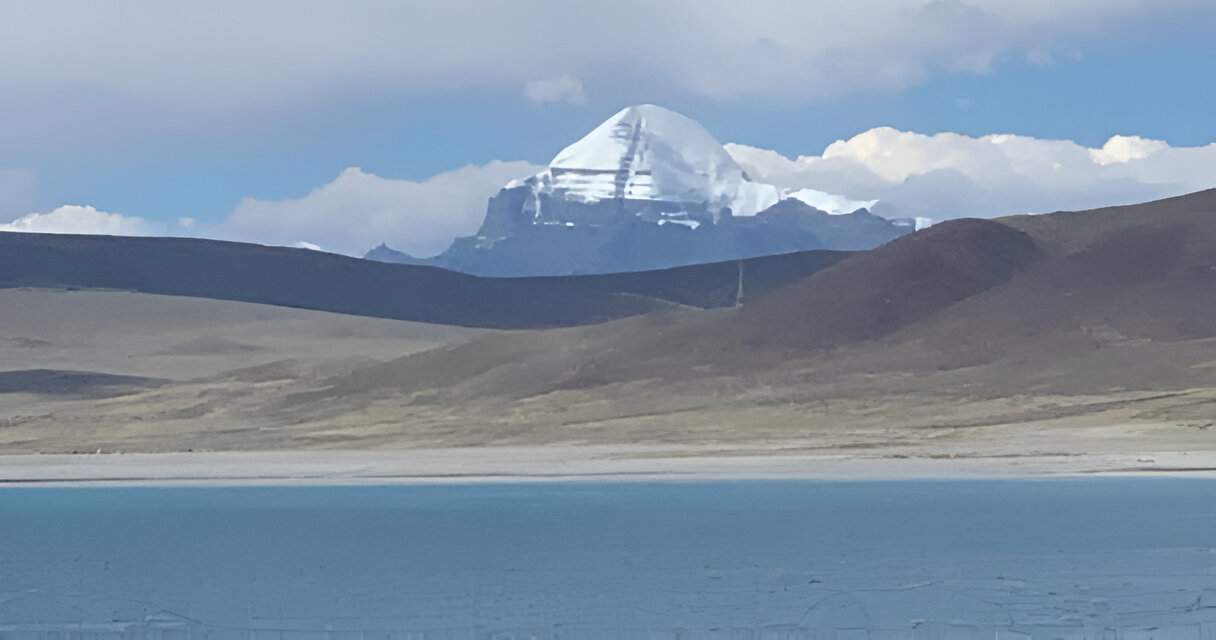
As we mentioned here, Mount Kailash is a mysterious mountain. And let’s be honest here; any mountain is bound to be mysterious if you know next to nothing about it. Since no one has conquered this mountain because of extreme restrictions, even the most knowledgeable people know next to nothing about Mount Kailash, so all we have are speculations and guesses. These speculations and guesses, when combined with local belief, have transpired to form deep mysteries that are still prominent to this day. So what are these Mount Kailash mysteries? Some of the popular mysteries surrounding this mountain are as follows:
1. Names in Different Languages and Religions
This entry on our list is more of a fact rather than a mystery, as this mountain has many names across multiple religions and languages. In Hinduism, this mountain is known as Kailash (कैलास), which is a name derived from the Sanskrit language meaning crystal or shining. Likewise, in Buddhism, this mountain is known as Kang Rinpoche (གངས་རིན་པོ་ཆེ་), meaning precious snow mountain. In Jainism, it is termed as Ashtapada, which essentially means a mountain with eight steps and in Bon, it is referred to as Tisé or Yungdrung Gutsek, which means nine stacked swastika mountains.
But it is not just the religions that have different names for this mountain. Its name changes depending on the language used as well. In Tibetan, this mountain is simply referred to as Gang Tise (གངས་རིན་པོ་ཆེ་), while in Sanskrit, as we mentioned prior, this mountain is referred to as Kailash. As for its Chinese name, it is Gāng Rénbōqí Fēng (冈仁波齐峰). That said, his name in Nepali is pretty much the same as the one in Sanskrit as in Nepal, it is called Kailash Parbat (कैलास पर्बत). In the Mongolian language, this mountain is referred to as Khan Uul.
So, the knowledge that Mount Kailash has multiple may not be a mystery; what it is called in various local languages is a mystery that you might want to know. That said, you can easily solve this mystery with a bit of research.
2. Axis Mundi: Why Mount Kailash is Called the Center of the Universe
Another mystery you might want to know is why Mount Kailash is called the centre of the universe. Neither is it located at the centre of the world nor is it even located at the center of its local region, let alone China and Asia. But it is without a doubt that Mount Kailash is called the centre of the world. But why? This Mount Kailash mystery too can be solved with a bit of research as the primary reason for this question is because of its significance in multiple religions. Furthermore, for the people of the past, this mountain was indeed located at the centre of their world, as it lies right between China and Tibet. The combination of religious belief and local location made local people believe that it was the centre of the world.
Elaborating a bit on this, Hindus revere it as the abode of Lord Shiva, Buddhists see it as the home of Buddha Demchog, and Jains believe it is where Rishabhanatha attained liberation. Bön identifies it as the dwelling of the sky goddess Sipaimen. And on top of this, there is also a concept of Axis Mundi attached to this mountain. For those unaware, Axis Mundi is a concept that views Mount Kailash as the world’s central axis linking heaven, earth, and the underworld. This idea emphasizes Kailash as the spiritual nexus of existence.
3. The Sacred Home of Lord Shiva
We are going to keep this one short as it is a rather well-known myth surrounding Mount Kailash. This mountain is considered the home of lord Shiva, also known as the destroyer and the regenerator of the world. It is believed that Lord Shiva, along with his consort Lord Parvati and his partner Nandi the Bull, resides on this mountain. And since you can’t really climb this mountain, there is no way to confirm or deny this claim. Because of this, there is a sense of everlasting mystery surrounding this mountain. It is also because of this reason that Kailash is viewed as not just a mountain but a sacred symbol of Lord Shiva’s eternal peace and divine energy. There is also a commonly held belief that by reaching the foot of this mountain, you can attain the grace of lord Shiva.
Also read: Mount Kailash Mansarovar Sacred Pilgrimage Journey
4. The Link Between Earth and Heaven
Since this mountain is considered to be the home of a literal god and his wife, would it be any surprise to consider it as the mountain that links heaven and earth? Well, this is another mystery that remains to be solved since it cannot be proven or disproven. Regardless, it is believed that Mount Kailash is a special place where the divine and mortal world connect at its peak. The peak is believed to act as a doorway that allows one to communicate and those in heaven to say hello from the other side if they deem you worthy enough. This sacred mountain also holds a deep spiritual significance across multiple cultures and religions which makes it a focal point of all the prayers as well. Because of this devotion, it is believed that the energy of the prayers flows between heaven and the earthly realm through this place. It serves as a reminder that there is more to life than what we can see, hinting at a profound connection to something greater beyond the clouds.
5. Is Lord Shiva’s Face Visible on Mount Kailash?
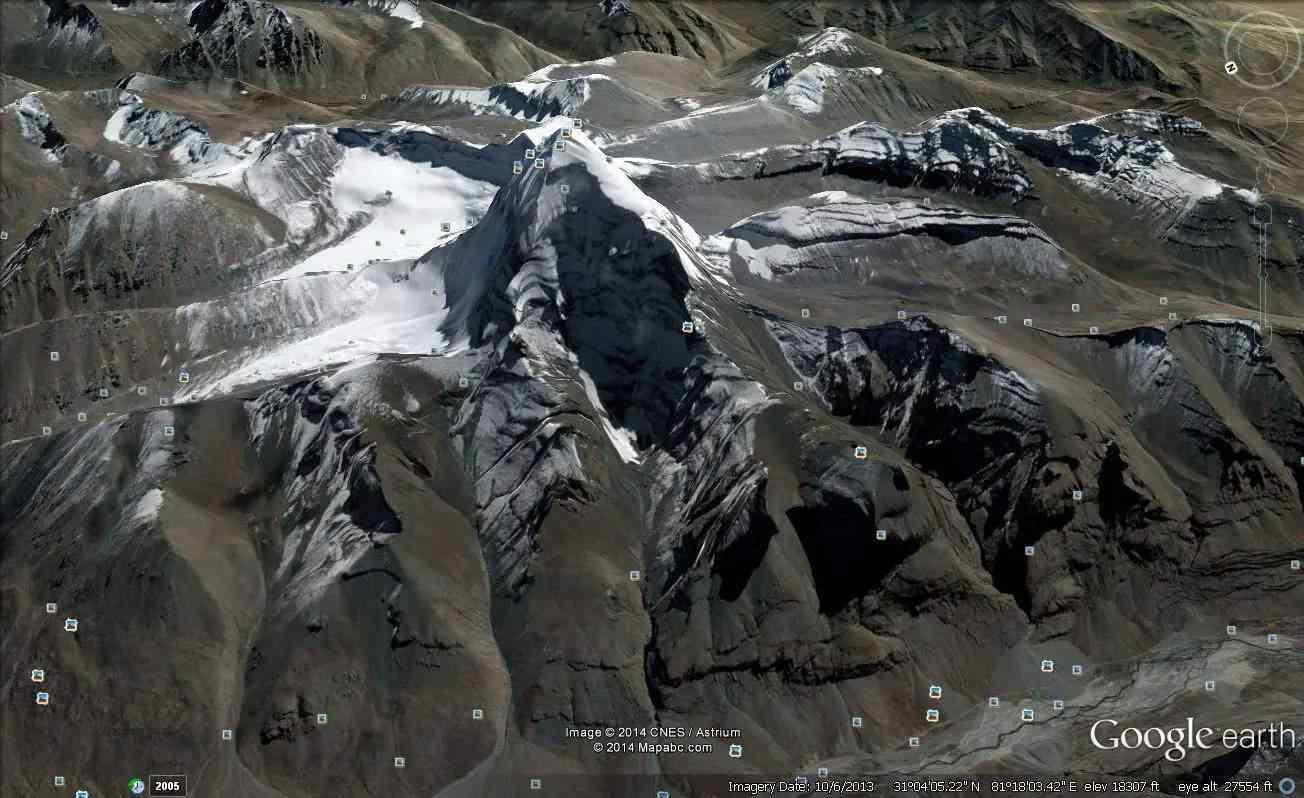
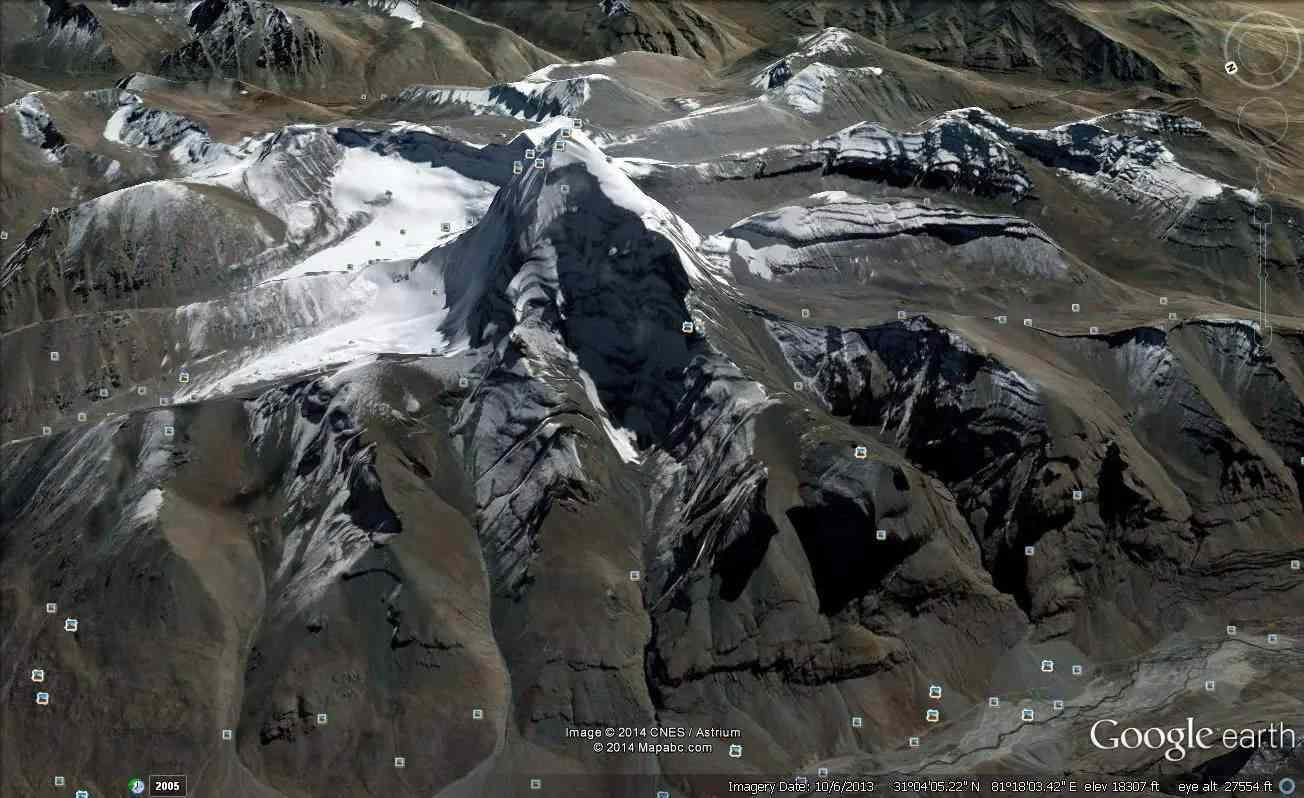
While we keep on saying that this mountain is the home of lord Shiva, did you know that if you view Mount Kailash at the right angle, you can even view a portrait of lord Shiva? While the image is a bit rough and might just be a case of pareidolia (a condition of seeing the human face in everyday objects), the rough structure of the face is indeed there.
But how come this happens? No one knows, and it is one of the Mount Kailash mysteries that is tough to solve, although pareidolia is one of the best answers out there. But if you are someone who believes in Hindu myth or is simply into Hindu culture, the fact that this mountain is called the abode of lord Shiva and that it shows a face as depicted in the mythos might seem more than just a coincidence or a psychological condition. So regardless of the reason, the fact that we can indeed see lord Shiva’s face-like structure and the mountain’s association with the lord makes this mystery, well, mysterious.
6. Time Travel at Mount Kailash: Myth or Reality?
Transitioning from the religious Mount Kailash mysteries to a more creepy one, visitors of Mount Kailash often claim that they feel time moving differently when they are near the peak. According to the claim of many visitors, they could feel their hair and nails growing at a faster pace than before they reached the peak area. They report that their hair and nails grew at an accelerated pace and could see them visibly growing within a day of reaching near the peak, a growth which would have taken weeks otherwise.
This aspect is often linked to the unique energy which flows from the mountain and it has indeed spooked many of the visitors. Some even claim that time in this entire area is moving at a faster period, and when they return from this region, they feel considerably older than they technically should have. So, is time travel really possible in this region? Well, scientists don’t think so; according to them, accelerated hair and nail growth can be attributed to physical exertion, and the feeling of aging can be attributed to the experience. This place is pretty remote, after all, and there is just about nothing to keep track of time besides the sun and moon. Furthermore, visitors often have a preset spiritual mindset on this journey, which can contribute to the feeling of time travelling differently.
Regardless of whether the time indeed does flow differently or it is just a psychological and biological phenomenon, visitors do experience change after visiting this place. So, is the Mount Kailash Mystery of time travel really solved? Not really, but we do have some plausible explanations, at least.
7. Does Mount Kailash Mysteriously Change Position?
Along with time travelling, another creepy phenomenon and mystery experienced by many climbers is that the mountain seems to have a mind of its own. Trekkers, to its base, claim that they have many near misses as they often find themselves going in the wrong directions despite following the established route. They also claim that they face random and unusual weather that should not have occurred as per the common understanding, such as random harsh winds on a clear sunny day or sudden onset of snow on a clear day. It is almost as if the mountain is preventing the trekkers from reaching their goal or testing the adventurers to see if they have what it takes to reach the base. While claims are anecdotes, in this case, even science can support some of these claims as much as possible.
The remoteness and barrenness of the mountain, along with weather conditions, can create optical illusions which, if not seen through, can create a sense of false directions among the climbers. Furthermore, the weather in this region is extremely unpredictable as well, and if you are unlucky enough, you can easily encounter random weather, which seems intentional. These two explanations do explain most of what the trekkers claim as the will of the mountain. When these reasonably explained geographical phenomenons are combined with spiritual and religious beliefs, it is reasonable to see why Mount Kailash can seem to change positions and seem as if it has a will of its own.
8. Swastika And Om Symbols On Mount Kailash
Going back to the more normal and religious Mount Kailash mysteries, did you know that if you look at Mount Kailash at the right time, you can find the symbol of Swastika and Om in the mountain? When the sunlight hits Mount Kailash at specific angles, the ridges and snow create a swastika pattern. If this wasn’t mysterious enough, during snowfalls, you could see the Om symbol created by the snow, if looked at the right timing. Both of these are religious symbols, with Swastika being a prominent symbol in Buddhism and Jainism, while the Om symbol is more prominent in Hinduism. The weird thing is that no one really knows why or how the seemingly random assortment of cliffs and valleys creates these religious symbols, which are thought to be diving symbols adapted by mankind.
9. Is Mount Kailash a Man-Made Pyramid?
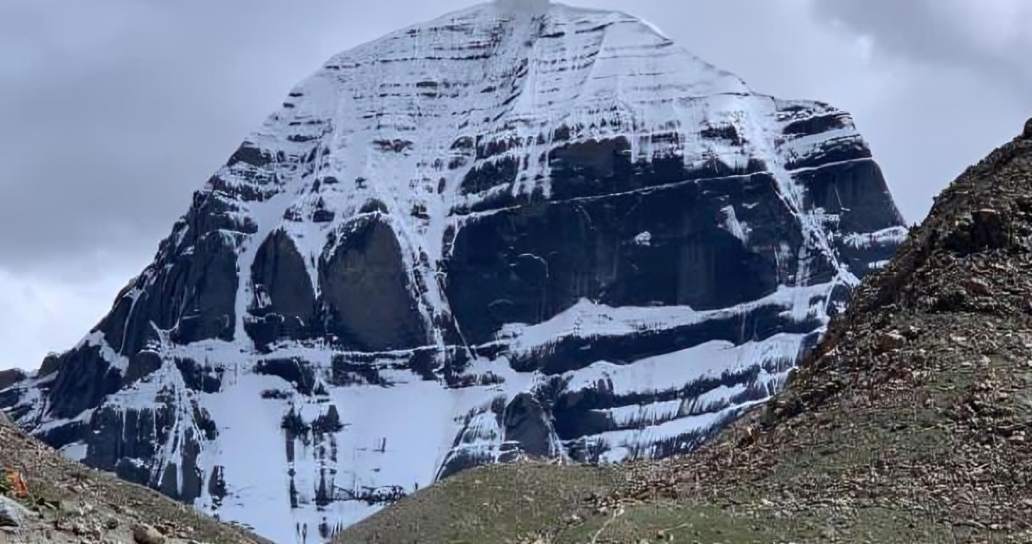
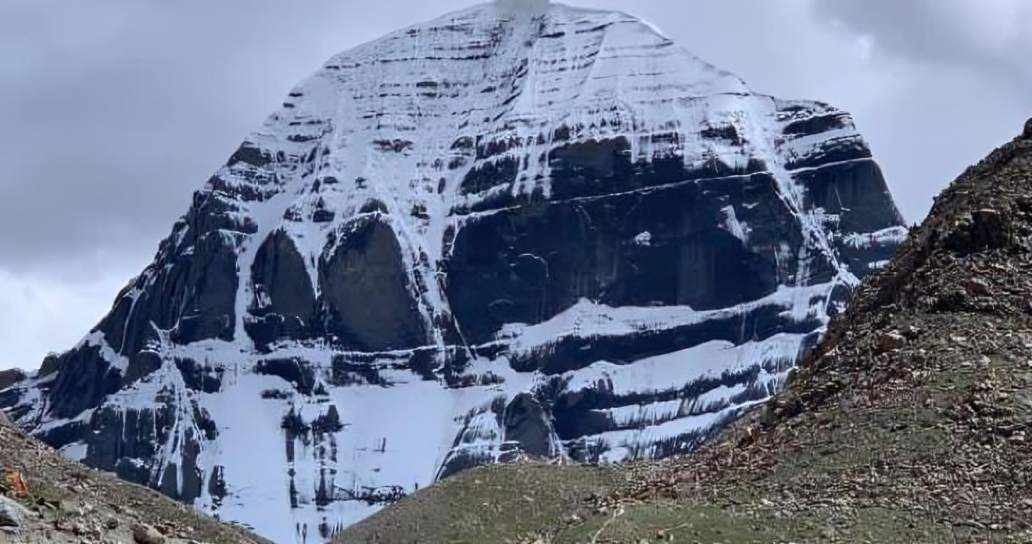
Now, another intriguing Mount Kailash mystery is- why the sides are so symmetrical. If you look at the images of Mount Kailash for a bit, you can find that some of the sides of Mount Kailash are pretty straight and far too symmetrical for a naturally occurring landscape. Because of this, some researchers have theorised that this mountain might be a man-made landscape, and it is one of the mysteries surrounding this peak. This theory is a bit wild but people have chipped away rocks and have made the pyramid back in the bronze age. So, it would not be too far-fetched to theorize that a large group of people worked collectively for many decades to chip away the rocks of a naturally formed mountain and transform it into a pyramid to worship the gods of the past.
While this is a bit far-fetched theory, it is certainly within the realms of possibility. Regardless of whether it was humans who made the walls straight or it was formed from some weird natural phenomenon, it is an intriguing concept, and the mystery of Mount Kailash being a pyramid is a fascinating one in itself.
10. The Mystery of Lake Manasarovar and Rakshastal
Following the mystery regarding the shape of Mount Kailash, let’s now discuss the mystery surrounding the lake Manasarovar and Rakshastal. The key mystery surrounding Lake Mansarovar is its near-perfect circle shape. Although circular lakes are present throughout the world, it is thought to find one as symmetrical as Lake Mansarovar. Furthermore, this lake is also believed to contain healing properties, and the water of this lake is described as showing a diving glow under the moonlight.
Its twin lake, Rakshasatal, is thought to be the counterpart to Lake Mansarovar in many ways. Unlike the waters of Lake Mansarovar, the ones from Lake Rakshastal are too salty to be drunk, and it is believed to be the darker side of Lake Mansarovar. In fact, its name reflects the evil inclination as the name of this lake literally translates to lake of demons.
These two lakes, in close proximity to each other, are considered to be the symbol of Yin and Yang, with Kailash Mansarovar representing the good aspect and Rakshastal representing the evil. The mystery here is how two lakes in such close proximity have diametrically opposing properties. Well, scientists are still trying to find that out to this day.
11. Mount Kailash: The Source of Four Major Rivers in Asia
The final entry on our list of Mount Kailash’s mystery is the mountain being the source of four major rivers in Asia. The mystery here is not that it is the source of the four major rivers but how it can be the source of so many rivers despite not having many of the characteristics that support it. Regardless, it is still considered the source of the four major rivers. These four major rivers include:
1. Indus River
The Indus River originates from the Tibet Autonomous Region near Mount Kailash, specifically from the Tibetan Plateau. It flows through China, India, and Pakistan, providing water to vast agricultural regions and is one of the longest rivers in the world. It is also the same river around which the Indus Valley Civilization was built.
2. Sutlej River
The Sutlej River is believed to have its origin from Lake Rakshastal and is one of the major rivers in northern India and Pakistan. It is among the five rivers in Punjab and contributes much to the agriculture and provision of water in the regions that it flows.
3. Brahmaputra River
This river, too, starts from the Tibetan Plateau, which is close to Mount Kailash. It flows through China, India, and Bangladesh; the Brahmaputra is a major river in South Asia, providing water for millions of people and playing a vital role in agriculture, transportation, and the ecosystem of the region.
4. Karnali River
Karnali is one of the major rivers of Nepal, and it too has its origin on the Tibetan plateau near Mount Kailash. It is the longest river in Nepal and an important water resource for the country. The river also has spiritual importance to Hindus since it is considered to flow from the holy region near Kailash.
And with this, we conclude the list of mysteries. Some of these mysteries, of course, have a partial explanation through science, while the others are just plain phenomena that scientists themselves declare quite unusual.
Conclusion
Mt. Kailash attracts many visitors in pursuit of spiritual peace, yet remains surrounded by numerous secrets on all sides. While some of these mysteries are rather well known, such as having multiple names, others are lesser known. Furthermore, while some Mount Kailash are reasonable and somewhat explainable by science, others are downright creepy and, when experienced, can make one’s hair stand on their end.
In this blog, we covered some of the Mount Kailash mysteries. We hope you found this entertaining. If you seek further insights into the various aspects of Mount Kailash, do check out some of our other blogs. And if you want the best service to visit Mount Kailash, look no further than Kailash Vision Treks – the best tour operator for Mount Kailash in Nepal. Thank you for reading till the end.