
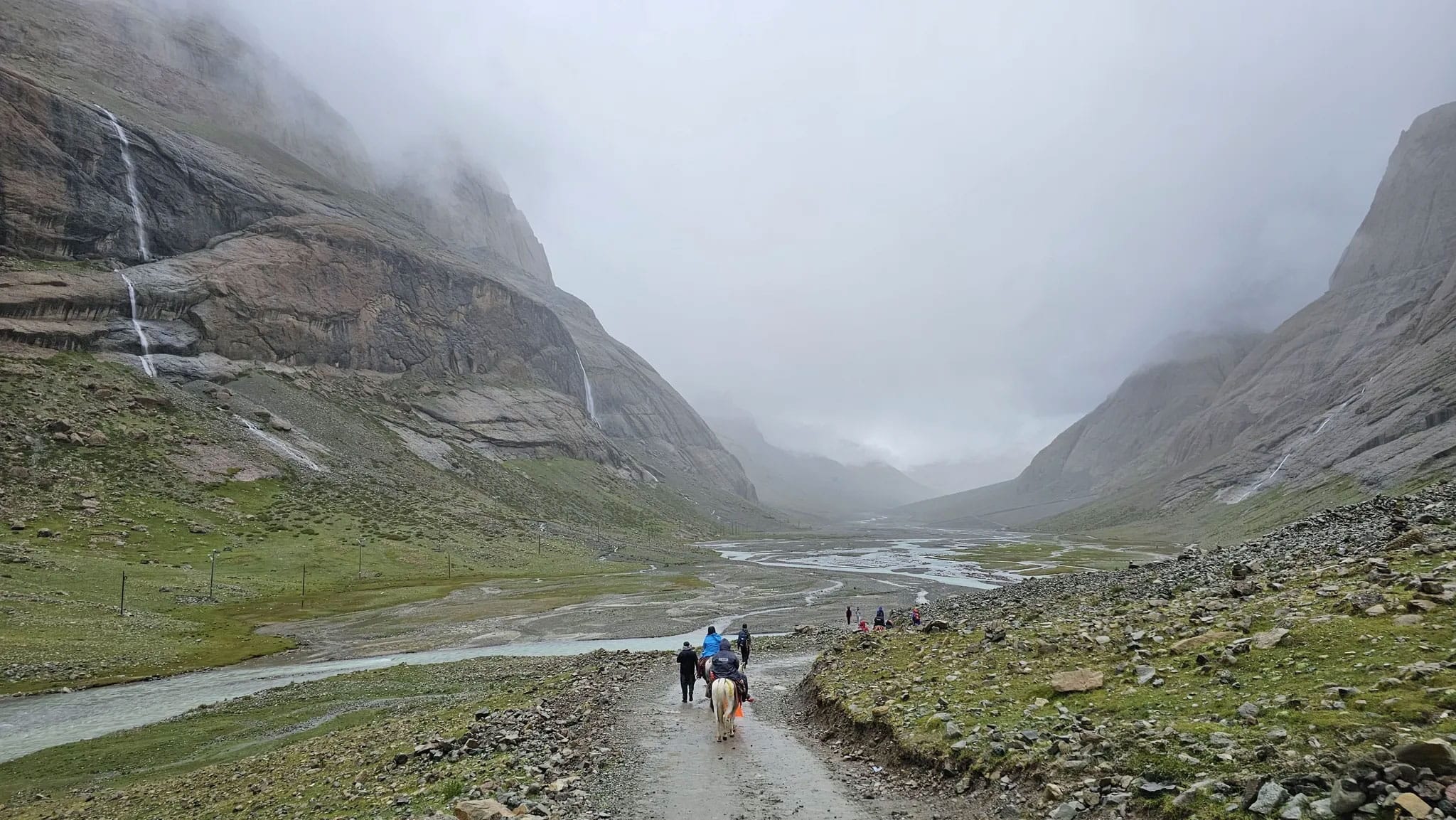
What Is the Kailash Mansarovar Yatra
The Kailash Mansarovar Yatra is a pilgrimage to Mount Kailash and Lake Mansarovar in the Tibet region of China. Mount Kailash sits at 6,638 meters above sea level on the Tibetan Plateau. Lake Mansarovar, situated at approximately 4,590 meters, is one of the highest freshwater lakes on Earth.
This sacred journey holds deep spiritual significance in four religions: Hinduism, Buddhism, Jainism, and the Bon tradition. In Hinduism, Mount Kailash is revered as the abode of Lord Shiva (Mahadev). Pilgrims perform a circumambulation — known as the Kora or parikrama — around Mount Kailash over three days, covering approximately 52 kilometers through extreme weather conditions at altitudes above 5,000 meters.
The Kailash Yatra begins from Kathmandu, Nepal or through routes via India and China. The journey involves trekking through uneven terrain, steep ascents, and high-altitude passes. The Dolma La Pass, the highest point of the Kora, reaches a staggering 5,636 meters — where oxygen content is roughly 50% of that at sea level.
Fitness preparation is not optional for this pilgrimage. It determines whether a pilgrim can complete the Kora safely or faces acute mountain sickness, bodily exhaustion, or emergency evacuation.
Why physical fitness matters for this pilgrimage
The Kailash Mansarovar Yatra demands sustained physical effort over 10 to 25 days, depending on the route and tour package. Pilgrims walk 6 to 8 hours daily on uneven terrain at high altitudes where the air carries significantly less oxygen than at sea level.
At 5,000 meters, the body receives roughly half the oxygen it processes at ground level. The heart works harder to pump oxygen-carrying blood. Legs feel like lead during steep ascents. Muscle fatigue sets in faster. Headaches, nausea, and dizziness — early symptoms of altitude sickness — affect even experienced trekkers who arrive without preparation.
A fitness preparation plan started at least three months before departure builds the cardiovascular health, muscular strength, lung capacity, and mental grit required for this trek. Without this preparation, the risk of acute mountain sickness increases, and the chances of completing the Kora decrease.
Cardiovascular exercises for high-altitude trekking
Cardiovascular fitness is the foundation of Kailash Yatra preparation. The heart and lungs must work efficiently to transport oxygen through the body at altitudes where every breath delivers less air.
Brisk walking
Brisk walking is the single most accessible cardio exercise for Yatra preparation. Start with 30 minutes daily on flat ground during the first month. Increase to 60 minutes by month two, then add inclines and uneven terrain. Walk daily — consistency matters more than intensity in the early stages.
Jogging and running
Jogging builds endurance and trains the heart to sustain effort over long durations. Begin with 15 to 20 minutes of steady jogging three times per week. Increase to 30 to 40 minutes by the end of month two. Running on hilly terrain provides the best simulation of actual trekking conditions.
Stair climbing
Climbing stairs daily is one of the best ways to prepare the legs for the steep ascents and descents of the Kora. Aim for 20 to 30 minutes of stair climbing, five days a week. Stair climbing targets the quadriceps, hamstrings, calves, and glutes — the same muscles that carry the body uphill on the trail.
Cycling
Cycling builds lower body endurance without the joint impact of running. Ride 30 to 45 minutes three to four times per week, increasing resistance over time to simulate uphill effort.
Swimming
Swimming develops full-body cardiovascular endurance and strengthens the respiratory system. It is a low-impact alternative for pilgrims with joint concerns. Two to three sessions of 30 minutes per week complement other cardio exercises.
Strength training for the Kailash Kora
The Kora around Mount Kailash requires the legs to carry body weight — plus a backpack — over rocky terrain, across rivers, and up steep passes for three consecutive days. Strength training prepares the muscles, joints, and lower back for this sustained load.
Lower body strength
Squats target the quadriceps, glutes, and thighs. Perform 3 sets of 15 repetitions, four days per week. Progress to weighted squats with a loaded backpack by month two.
Lunges build leg strength and improve balance on uneven ground. Perform 3 sets of 12 per leg. Forward and lateral lunges train stability across different planes of movement.
Calf Raises strengthen the calves for sustained walking and climbing. Perform 3 sets of 20. Strong calves reduce the risk of muscle fatigue during long descents, particularly downhill from the Dolma La Pass.
Upper body and core
Push-Ups develop upper body and core strength needed for carrying a daypack and maintaining posture over long trekking hours. Perform 3 sets of 10 to 15 repetitions.
Planks build core stability, which protects the lower back and spine during extended walks with a loaded backpack. Hold for 30 to 60 seconds, three to four sets daily.
Practice hikes with a weighted backpack
The most direct strength training for the Kailash Yatra is hiking with a weighted backpack. Start with 5 kg and increase to 8 to 10 kg over eight weeks. Hike on trails with elevation changes for 2 to 3 hours on weekends. This builds the specific carrying capacity the body needs on the trail.
Breathing exercises and lung capacity
Oxygen intake drops significantly at high altitudes. Breathing exercises train the lungs to extract more oxygen from each breath and increase vital capacity — the total volume of air the lungs can hold.
Pranayama
Pranayama is a set of yogic breathing techniques central to Kailash Yatra preparation. Practice 15 to 20 minutes daily, ideally in the morning routine.
Alternate Nostril Breathing (Anulom Vilom): Close the right nostril, inhale through the left for 4 counts. Close both, hold for 4 counts. Release the right nostril, exhale for 8 counts. Repeat on the other side. This technique calms the respiratory system and improves oxygen flow.
Kapalabhati (Skull Shining Breath): Sit upright. Perform 30 short, forceful exhalations through the nose, drawing the belly in with each exhale. The inhalation occurs passively. This technique strengthens the diaphragm and clears the respiratory passages.
Bhastrika (Bellows Breath): Inhale and exhale forcefully through the nose in rapid succession, 15 to 20 cycles per round. Rest for 30 seconds between rounds. Bhastrika increases lung capacity and trains the lungs to process air efficiently.
Diaphragmatic breathing
Breathe into the belly rather than the chest. Place one hand on the belly, one on the chest. Inhale deeply — the belly should rise while the chest remains still. Exhale slowly. Practice 10 minutes daily. Diaphragmatic breathing corrects shallow chest breathing, which reduces oxygen intake at high altitudes.
Deep breathing practice
Inhale for 4 counts, hold for 7 counts, exhale for 8 counts. Perform 5 to 10 cycles before bed. Deep breathing increases the lungs’ vital capacity and prepares the respiratory system for the thin air of the Tibetan Plateau.
Flexibility and yoga for trekkers
Long hours of walking on uneven terrain cause muscle stiffness, particularly in the hips, hamstrings, shoulders, and lower back. Daily stretching and yoga maintain joint mobility and reduce injury risk.
Recommended yoga poses
Tadasana (Mountain Pose): Stand with feet together, weight balanced evenly. Arms at sides, shoulders relaxed. Hold for 60 seconds. Tadasana builds postural awareness and balance — both essential during long walks on rocky trails.
Trikonasana (Triangle Pose): Step feet wide apart, turn right foot out. Extend arms and lean toward the right foot, reaching the right hand to the shin. Hold for 30 seconds per side. Triangle Pose opens the hips and stretches the hamstrings and hip flexors.
Balasana (Child’s Pose): Kneel, sit back on heels, and fold forward with arms extended. Hold for 60 seconds. This pose releases tension in the lower back, shoulders, and spine after long days of walking.
Surya Namaskar (Sun Salutation): This ancient sequence of 12 postures performed in flow provides a complete body workout — building flexibility, strength, and cardiovascular endurance in one session. Start with 5 rounds daily. Increase to 10 to 12 rounds by month two of preparation.
Daily stretching
Dedicate 10 to 15 minutes to stretching after every exercise session. Focus on the quadriceps, hamstrings, calves, hip flexors, shoulders, and lower back. Daily stretching prevents muscle stiffness that can slow pace and cause injury during the trek.
Altitude acclimatization and sickness prevention
Altitude sickness (acute mountain sickness) is the primary health risk of the Kailash Mansarovar Yatra. It occurs when the body cannot adapt fast enough to decreased oxygen and reduced air pressure at high altitudes. Symptoms include headache, nausea, dizziness, fatigue, and difficulty breathing.
How acclimatization works
The body needs time to adjust to low oxygen. Blood pressure changes, breathing rate increases, and the body produces more red blood cells to carry oxygen. A gradual build-up in altitude — not a rapid ascent — gives these systems time to adapt.
Most Kailash Yatra itineraries include one to two acclimatization days in Kathmandu (1,400 meters) and at intermediate stops before reaching the Tibetan Plateau. Use these days for light walking and hydration, not rest in bed.
Prevention strategies
- Drink water consistently — 3 to 4 liters per day at altitude. Dehydration accelerates altitude sickness symptoms.
- Do not consume alcohol or caffeine during the trek. Both inhibit the body’s ability to acclimatize.
- Avoid smoking entirely. Smoking reduces lung function and the blood’s ability to carry oxygen.
- Walk slowly and maintain a steady pace. Pushing beyond comfortable effort levels triggers fatigue and headaches.
- Rest regularly. Stop every 30 to 45 minutes during steep ascents.
- Eat small, frequent meals. Complex carbohydrates provide sustained energy without taxing digestion.
Altitude medication
Acetazolamide (Diamox) is a prescribed altitude medication that helps the body acclimatize by increasing breathing rate and oxygen intake. Consult a doctor before departure. Do not self-prescribe. Carry prescribed altitude medication in a personal first-aid kit.
Mental fitness and meditation
The Kailash Mansarovar Yatra tests mental grit as much as physical fitness. Long days of walking in cold weather, limited accommodation, no restaurants, scarce bathrooms, limited internet access — these conditions demand mental fortitude.
Meditation practice
Practice meditation for 10 to 15 minutes daily during the preparation months. Sit comfortably, close the eyes, and focus on the breath. When attention wanders, return it to breathing without judgment. Meditation builds concentration, attention, and the ability to remain calm under demanding conditions.
Visualization
Spend 5 minutes daily visualizing the journey — the terrain, the cold, the physical effort, and the completion of the Kora. Visualization prepares the mind to handle discomfort without panic.
Chanting and mantra
Many pilgrims practice chanting “Om Namah Shivaya” or Tibetan greetings like “Tashi Delek” as a form of moving meditation during the Kora. Chanting maintains a positive mind, regulates breathing, and helps overcome mental struggle during steep ascents.
Building mental resilience
Start early. Train in uncomfortable conditions — walk in rain, cold, and wind. Practice walking when fatigued. The mind adapts to difficulty through repeated exposure. Mental fitness preparation is not separate from physical training — it is built into every challenging workout.
Nutrition and dietary preparation
The body needs specific nutrients to build endurance, repair muscle, and maintain energy at high altitudes. Start dietary preparation two to three months before departure.
Complex carbohydrates for sustained energy
Complex carbohydrates provide slow-release energy for long trekking days.
- Oats — ideal for breakfast. High in fiber and sustained energy.
- Brown Rice — provides complex carbs and B vitamins for energy metabolism.
- Whole Wheat — bread, chapatis, and pasta made from whole wheat maintain blood sugar levels during sustained effort.
Proteins for muscle repair
Muscles require protein for repair after daily training and during the trek itself.
- Dal and Lentils — plant-based protein staples available throughout Nepal and the trek route.
- Paneer — a high-protein dairy source.
- Sprouts and Soya — complete plant proteins for vegetarian pilgrims.
Iron for oxygen-carrying capacity
Iron supports the blood’s ability to carry oxygen — a function that becomes critical at altitude.
- Spinach — rich in iron and antioxidants.
- Beetroot — increases the blood’s oxygen-carrying capacity.
- Jaggery — a natural iron source common in South Asian diets.
Antioxidants for recovery
- Berries — reduce oxidative stress from intense exercise.
- Green Tea — provides antioxidants without caffeine spikes.
- Citrus Fruits — vitamin C supports immune function during the trek.
Hydration and electrolytes
Carry a reusable water bottle. Drink water consistently. Add electrolyte salts to maintain salt balance at altitude. Dehydration at 5,000 meters accelerates altitude sickness and muscle fatigue.
Medical check-ups and health risk assessment
A comprehensive medical check-up is required before departing for the Kailash Mansarovar Yatra. Complete the following assessments at least six weeks before travel:
- ECG — evaluates heart health and detects underlying cardiovascular conditions.
- Blood Pressure — must be within normal range. High blood pressure increases risk at altitude.
- Blood Sugar Levels — uncontrolled blood sugar creates a significant health risk during the trek.
- BMI (Body Mass Index) — excessive body weight increases the physical strain of high-altitude trekking.
- Lung Function Test — measures vital capacity and respiratory efficiency.
- Fitness Certificate — many tour operators require a medical fitness certificate from a doctor confirming the pilgrim is physically fit for high-altitude trekking.
Consult a doctor about any underlying conditions, prescribed medications, and the use of altitude medication like acetazolamide.
Sample weekly fitness plan
This sample weekly fitness plan is designed for the final two months of preparation. Adjust duration and intensity based on current fitness level.
| Day | Exercise Focus | Activity | Duration |
|---|---|---|---|
| Monday | Cardio | Brisk walking or jogging on inclined terrain | 45–60 minutes |
| Tuesday | Strength Training | Squats, lunges, calf raises, push-ups, planks | 40 minutes |
| Wednesday | Breathing and Flexibility | Pranayama, diaphragmatic breathing, yoga | 30–40 minutes |
| Thursday | Cardio | Stair climbing or cycling | 45 minutes |
| Friday | Strength Training | Weighted backpack hike on trails, core exercises | 60–90 minutes |
| Saturday | Practice Hike | Long walk or hiking on uneven terrain with loaded backpack | 2–3 hours |
| Sunday | Rest and Recovery | Meditation, light stretching, deep breathing | 20–30 minutes |
Weekly Training Goal: Build endurance and leg strength gradually. Increase distance and weight weekly. The training goal by month two is walking 10 to 12 kilometers with an 8 to 10 kg backpack on uneven terrain without excessive fatigue.
Packing list and hear essentials
Packing for the Kailash Mansarovar Yatra requires a balance between carrying essentials and keeping weight manageable. Carry not more than 10 to 12 kg in the daypack. Heavy luggage travels separately on pack animals or vehicles, depending on the route.
Clothing
- Thermal wear — base layer for cold weather at altitude
- Fleece jacket — mid-layer insulation
- Down jacket — essential for nights and the Dolma La Pass
- Waterproof and lightweight raincoat
- Trekking pants — quick-dry, durable
- Warm hat, gloves, and scarf
- Sun protection: cap, sunglasses with UV protection, sunscreen (SPF 50+), lip balm
Footwear
- Trekking boots — waterproof, ankle-supporting, and broken in before the trip. The boot rule: never wear brand-new boots on the trail. Break in boots for at least four weeks before departure.
- Warm wool socks — carry multiple pairs
- Lightweight camp shoes for rest stops
Trekking gear
- Trekking poles — reduce strain on the knees during steep descents
- Daypack — 30 to 40 liters, with rain cover
- Sleeping bag — rated for temperatures as low as -15°C
- Water bottle with filter
- Headlamp with extra batteries
First-aid kit
- Pain relief medication (paracetamol, ibuprofen)
- Prescribed altitude medication (acetazolamide/Diamox)
- Antiseptics and band-aids for blisters
- Oral rehydration salts
- Personal medications
Food and snacks
- Energy bars, dried fruits, and nuts — for sustained energy between meals
- Glucose tablets
- Electrolyte sachets
Personal items
- Toiletries, wet wipes, hand sanitizer
- Travel documents, passport, visa copies
- Cash in USD and Nepalese currency
- Travel insurance documents
- Mobile phone with Viber or WhatsApp for communication (internet access is limited on the trail)
Weather conditions and clothing guide
Weather on the Tibetan Plateau and around Mount Kailash changes rapidly. Temperatures at the Dolma La Pass can drop below -20°C at night, while daytime sun on exposed terrain can cause sunburn and dehydration.
Extreme weather risks
A clear morning can turn into a blizzard within hours. Rain, wind, and sudden temperature drops affect visibility and trekking safety. Weather can flip from sun-drenched terrain to biting cold within minutes.
Layered clothing strategy
Dress in layers: a moisture-wicking thermal base layer, an insulating fleece mid-layer, and a waterproof outer shell. Remove or add layers as conditions change throughout the day.
Sun protection
At altitudes above 4,500 meters, UV radiation is significantly stronger than at sea level. Wear sunscreen with SPF 50+, UV-blocking sunglasses, a cap, and lip balm to prevent sunburn and skin damage.
Checking the weather forecast
Check the weather forecast for the Tibet region and Kailash area two weeks before departure and daily during the trek. Tour guides and Sherpas monitor conditions and adjust itineraries based on weather.
Travel insurance and emergency evacuation
Travel insurance with emergency evacuation coverage is a requirement for the Kailash Mansarovar Yatra. Standard travel insurance policies do not cover high-altitude trekking above 4,000 meters. Verify that the policy specifically covers:
- Emergency helicopter evacuation from altitudes above 5,000 meters
- Medical treatment for altitude sickness and acute mountain sickness
- Trip cancellation and interruption
- Coverage for the Tibet region and Nepal
Purchase travel insurance at least two weeks before departure. Share policy details with the tour operator and carry printed documents. Helicopter evacuation from the Kora route to Kathmandu can cost 5,000 to 15,000 USD without insurance.
Route, visa, and tour operator details
Route options
The two primary routes to Mount Kailash are:
- Via Kathmandu, Nepal: Most international pilgrims travel through Kathmandu. The journey proceeds overland to the Tibet border at Simikot or via the Friendship Highway. This route takes 12 to 18 days depending on the itinerary.
- Via India (Lipulekh Pass): Indian pilgrims may travel through the Lipulekh Pass route organized by the Ministry of External Affairs. This route requires a separate application and permit process.
Visa and permit process
- A valid passport is required with at least six months validity.
- A Chinese visa (Tibet Travel Permit) is arranged through the tour operator. Non-Indian nationals require a Chinese visa and a separate Tibet Travel Permit.
- Arrival at Kathmandu Airport requires a Nepal visa, available on arrival for most nationalities.
- The permit process takes three to four weeks. Start early — do not leave visa and permit applications to the last minute.
Tour operators
The Kailash Mansarovar Yatra must be arranged through a registered tour operator. Independent travel is not permitted in the Tibet region. Tour packages typically include accommodation, meals, transportation, guide services, permits, and group travel coordination.
Select a tour operator with verified reviews, a clear itinerary, comprehensive support, and experience handling the permit process and emergency situations. A Tibetan guide accompanies every group through the Tibet region.
Best time to visit
The best time for the Kailash Mansarovar Yatra is May through September. June and July offer the most stable weather conditions. The Saga Dawa festival (May–June) is a spiritually significant period when many pilgrims undertake the Kora.
Cost
Tour package costs range from 1,500 to 4,000 USD per person, depending on the route, duration, accommodation level, and services included. Helicopter options for portions of the route are available at additional cost. Budget for additional personal expenses, tips for guides and Sherpas, and emergency contingency funds.
Conclusion
The Kailash Mansarovar Yatra is a pilgrimage that tests every dimension of a person’s fitness — cardiovascular endurance, muscular strength, lung capacity, mental resilience, and spiritual readiness. Mount Kailash, the sacred abode of Lord Shiva, stands at extreme altitude on the Tibetan Plateau, surrounded by terrain that demands physical preparation, proper gear, and medical clearance.
Start fitness preparation at least three months before departure. Build cardiovascular endurance through brisk walking, jogging, and stair climbing. Develop leg strength with squats, lunges, and practice hikes with a weighted backpack. Train the lungs with pranayama, Kapalabhati, and diaphragmatic breathing. Prepare the mind through meditation and visualization. Complete all required medical check-ups and obtain a fitness certificate.
The first step toward completing the Kora around Mount Kailash is a committed, disciplined fitness plan that transforms a spiritual dream into a reality. Contact a registered tour operator to confirm your tour date, start your fitness training, and prepare for one of the most sacred journeys on Earth.