Choosing the best tour operator for Kailash Mansarovar Yatra is one of the most important decisions you will make when planning this holy pilgrimage.
Mount Kailash and Lake Mansarovar are located in a remote, high-altitude region of western Tibet in China. Reaching this special place involves complex travel permits, border crossing procedures, long road journeys, changing weather conditions and accommodation in remote areas.
The Kailash Kora also crosses Dolma La Pass at approximately 5,630 metres. Careful acclimatisation, experienced guiding services and a clear emergency plan are essential.
The right tour operator does much more than organise transport and hotels. A trusted operator should take care of your permits, accommodation, meals, guides, oxygen, border procedures and high-altitude safety protocols. This allows pilgrims to concentrate on the spiritual significance of Mount Kailash and the beauty and energy of holy Lake Mansarovar.
Kailash Vision Treks is a Kathmandu-based travel agency specialising in Kailash Mansarovar travel and other spiritual journeys through Nepal, Tibet, India and Bhutan. Established in 2016 and supported by more than 15 years of travel experience, the company offers Kailash Yatra tours for Indian citizens, Nepalese citizens, NRIs and international travellers. Learn more about Kailash Vision Treks.
View available Kailash Mansarovar Yatra packages.
Why choosing the right Kailash Yatra operator matters
The Kailash pilgrimage is not an ordinary holiday. It is a demanding journey through isolated, high-altitude terrain where weather, road access, permit rules and local conditions can change.
A reliable tour operator must coordinate:
- Tibet permits and Chinese visa requirements
- Nepal–Tibet border formalities
- Tibet travel arrangements and local regulations
- Hotels, guesthouses and remote accommodation
- Road transport and heli connections
- Vegetarian meals and safe drinking water
- Planned acclimatisation days
- Oxygen and basic medical supplies
- Professional local guides, Sherpas and support staff
- The three-day Mount Kailash Kora
- Tibetan horse or porter arrangements when available
- Emergency backup and evacuation arrangements
- Delays caused by flights, roads or weather conditions
- Communication with the group before and during the tour
When these arrangements are properly managed, pilgrims have more time to enjoy the spiritual journey and are taken care of throughout the pilgrimage experience.
What makes the best Kailash Mansarovar Yatra tour operator?
Tour operators can advertise similar itineraries, but the quality of their planning, support and local network can differ significantly. Here are the main areas to compare before choosing a tour operator.
1. Genuine Kailash Mansarovar experience
A general travel agency may organise popular holidays, but Kailash Mansarovar Yatra requires expert knowledge of high-altitude travel, Tibet tourism, permit handling and remote logistics.
Ask each operator:
- How long have you organised Kailash tours?
- How many groups do you manage each season?
- Does your team have direct experience in Nepal and Tibet?
- Who will be the pilgrimage guide?
- What guiding services are provided?
- What happens if the China border closes temporarily?
- How does the company respond to weather or health problems?
- Can you provide reviews or testimonials from previous pilgrims?
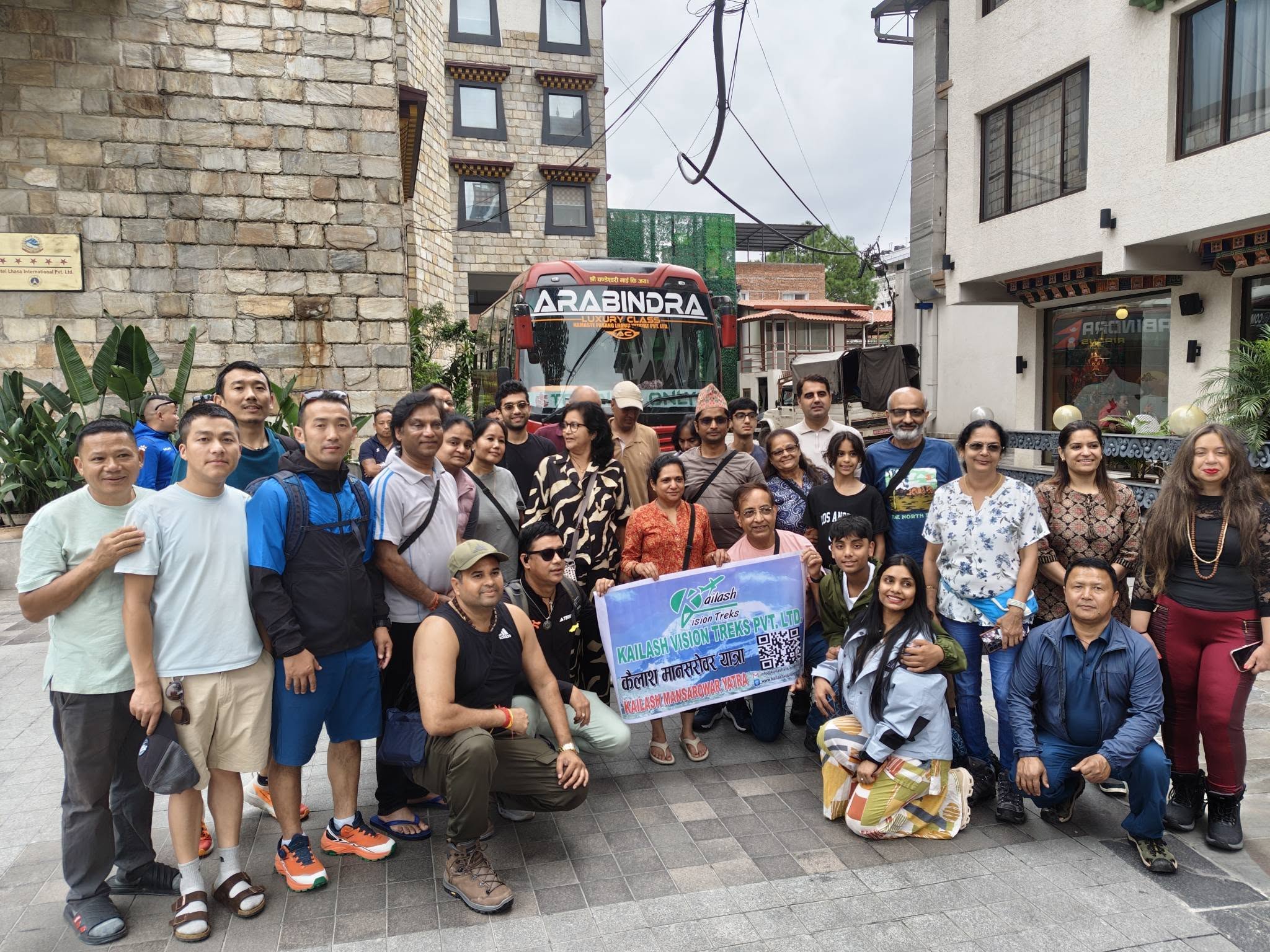
Kailash Vision Treks was established in 2016. Its director, Sagar Acharya, previously worked for more than a decade as an operations manager and tour leader, including organising Kailash Yatra journeys in Tibet. This provides the company with a proven track record in Himalayan travel and pilgrimage operations. Read about the company and its experience.
2. A properly paced itinerary
Rapid ascent can lead to altitude sickness. A good operator will ensure the itinerary provides enough time for acclimatisation before visiting Kailash Lake Mansarovar or beginning the Kora.
A typical overland journey follows the Nepal–Tibet route from Kathmandu to Kerung, Saga, Lake Mansarovar and Darchen. This approach can provide a more gradual introduction to high altitude when suitable acclimatisation days are included.
The itinerary should not be shortened simply to create a cheaper or faster yatra package. Pilgrims need at least enough time to adjust before travelling deeper into the Tibetan Plateau.
This becomes even more important before crossing Dolma La Pass, the highest and most demanding section of the Kailash Parikrama. Poor acclimatisation can lead to serious illness and may prevent a pilgrim from safely completing the Kora.
3. Clear medical and altitude protocols
Even healthy travellers can experience altitude sickness. A safe and experienced tour operator should explain the risks honestly and have clear health and emergency protocols.
Before you book, ask about:
- The number of acclimatisation days
- Oxygen availability
- First-aid and medical supplies
- Daily health observations
- Communication in remote locations
- The operator’s emergency plan
- Emergency backup vehicles or staff
- Evacuation procedures
- Travel insurance requirements
- Support for pilgrims who cannot complete the Kora
No operator can guarantee that every pilgrim will complete the journey. The guide will assess conditions and help the group make responsible decisions. Travel safety must come before Kailash darshan or completing a fixed itinerary.
Altitude sickness can lead to a medical emergency if warning signs are ignored. A reliable tour company should never pressure an unwell traveller to continue.
4. Reliable Tibet permit and visa handling
International visitors cannot independently visit the Mount Kailash region. Tibet travel requires permits and organised services through an approved travel arrangement.
Requirements can depend on:
- Passport and nationality
- Selected Nepal–Tibet or China route
- Whether the traveller starts in Kathmandu or Lhasa
- Chinese visa status
- Tibet Travel Permit requirements
- Group visa procedures
- Current Tibet tourism regulations
- Border and immigration policies
A good operator should explain the travel permit process, expected processing times and documents required. It should also ensure travellers understand that a Tibet permit and Tibet Travel Permit are different from an ordinary tourist visa.
The Kathmandu–Lhasa process and the Kathmandu overland process may involve different entry arrangements. International travellers considering several days in Lhasa should confirm the correct Chinese visa and permit process before finalising flights.
Regulations can change. Always request current information before you pay for international flights or other non-refundable services.
5. A strong local network
A Kailash Mansarovar tour involves multiple service providers across Nepal and Tibet. Strong local relationships are essential for a safe, smooth journey.
The operator may need to coordinate:
- Airport representatives
- Visa and permit staff
- Nepalese guides and Sherpas
- Tibetan guides
- Drivers and transport providers
- Hotels and guesthouses
- Border representatives
- Kitchen teams
- Horse and porter providers
- Emergency transport
Kailash Vision Treks is based in Kathmandu and has established partnerships across Nepal, Tibet and India. Its network supports permit handling, local transport, accommodation, border assistance and other services needed during the yatra. The company describes safety, care and personalised service as central parts of its approach. See Kailash Vision Treks’ company profile.
6. Transparent pricing and no hidden costs
Never choose a Kailash Mansarovar tour package using only the lowest advertised price. Inexpensive packages can become costly when important services are excluded.
Ask for a detailed written breakdown covering:
- Airport transfers
- Arrival in Kathmandu assistance
- Stay in Kathmandu
- Hotels and guesthouses
- Accommodation quality in each location
- Vegetarian meals
- Drinking water
- Tibet permits and visa fees
- Border crossing arrangements
- Road transport
- Domestic flights or heli sectors
- Guides and support staff
- Oxygen supplies
- Entry fees
- Duffel bags or equipment
- Tibetan horse and porter costs
- Travel insurance
- Emergency evacuation
- Tips and personal expenses
- Extra nights caused by delays
The operator should also provide a clear cancellation policy, payment schedule and refund conditions. There should be no hidden costs or vague verbal promises.
Current package durations, departure dates and pricing should always be checked directly before booking. Kailash Vision Treks presently lists overland and helicopter programs structured by nationality, route and duration. Review its current Kailash Mansarovar packages and pricing.
7. Realistic accommodation expectations
A luxury hotel experience may be available during your stay in Kathmandu, but a luxury standard cannot be expected throughout western Tibet.
Accommodation near Saga and Darchen may be relatively comfortable, but services around Lake Mansarovar and during the Kailash Kora are more basic. Guesthouses can have shared bathrooms, simple bedding and limited heating.
A trusted operator will provide honest information about accommodation quality instead of promising facilities that may not be available in this remote terrain.
8. Genuine reviews and testimonials
Online reviews can help you compare companies, but they should be considered carefully.
Check:
- Google reviews
- Written testimonials
- Recent traveller photos
- Comments about guides and ground support
- How the company handled delays or health problems
- Whether reviews mention the same staff and services
- Whether the feedback covers the selected route
Do not rely solely on star ratings. Detailed reviews explaining how pilgrims were taken care of are more useful than short, generic statements.
Company Blogs and third-party blog articles can provide additional information, but they should not replace direct questions about permits, safety, inclusions and cancellation terms.
Overland or helicopter: which route should you choose?
Kailash Vision Treks offers both overland and helicopter-based packages. Availability depends on nationality, permits, departure dates and current regulations.
| Consideration | Overland Yatra | Helicopter Yatra |
|---|---|---|
| Travel style | Mainly road travel through Nepal and Tibet | Flights and heli sectors followed by road travel |
| Common route | Kathmandu–Kerung–Saga–Mansarovar | Nepalgunj–Simikot–Hilsa, followed by Tibet |
| Duration | Usually longer | Usually shorter |
| Acclimatisation | More gradual when properly planned | Requires especially careful pacing |
| Pricing | Generally more economical | Usually more expensive |
| Main challenge | Long hours on the road | Weather-sensitive flights |
| Kora | Three-day Kailash Kora where permitted and medically suitable | The same Kora requirements apply |
Overland Kailash Yatra
The overland option is popular with travellers who prefer a gradual road journey and have more time available. After arrival in Kathmandu, the route generally crosses the Nepal–Tibet border and continues through Kerung and Saga towards holy Lake Mansarovar.
A well-designed overland itinerary can create a more gradual acclimatisation schedule. However, it still includes lengthy drives, high altitude and basic facilities in remote areas.
Helicopter or heli route
The helicopter route commonly involves travel from Lucknow or Nepalgunj to Simikot, followed by the Simikot–Hilsa sector and road travel in Tibet.
The Nepalgunj–Simikot and Simikot–Hilsa flights are highly dependent on local weather conditions. Seats are limited, and delays can occur.
The heli route does not fly directly to the face of Mount Kailash. Pilgrims still travel by road after reaching the border area and remain exposed to high altitude.
It is shorter, but it is not automatically easier or safer. A rapid ascent can lead to altitude problems if sufficient acclimatisation is not included.
Lhasa and Kailash route
Some international Tibet travel programs may combine Kathmandu, Lhasa, the Tibetan Plateau and Mount Kailash. A Kathmandu–Lhasa journey can also include cultural sites and several days in Lhasa before continuing west.
This route may appeal to travellers who want to explore Tibetan culture, monasteries and the wider landscape. However, route availability, group visa rules and Tibet permits must be confirmed.
Routes through India
Adi Kailash Yatra, Om Parvat Yatra and the Adi Kailash–Om Parvat journey are separate pilgrimages in India. They should not be confused with Mount Kailash Lake Mansarovar in Tibet.
Similarly, Lipulekh Pass was historically associated with an official India-based Kailash Mansarovar route, but access conditions and government policies can change.
Kailash Om Parvat, Kailash Parvat in Tibet and Adi Kailash are spiritually connected in the minds of many devotees, but they are different destinations and require different permits and itineraries.
Group tours, small-group tours and private tours
A Kailash Mansarovar group tour is usually the most practical option because Tibet entry, transport and ground operations are commonly managed on a group basis.
Standard group tour
A standard Mansarovar group tour can provide:
- More economical pricing
- Fixed departure dates
- A shared spiritual experience
- Group support during the Kora
- Organised permits and transport
Joining a Kailash Mansarovar group can create a special sense of community. Pilgrims are often able to encourage one another during difficult sections of the journey.
Small-group tour
Small-group tours can offer more personal support, simpler communication and greater flexibility within the approved itinerary. A small group may also make health monitoring and daily coordination easier.
Private tours
Private tours may suit families, religious organisations or travellers who want more personal service. However, Tibet permit requirements, group rules and fixed travel arrangements still apply.
When comparing group tours, private tours or tours combining private and shared arrangements, ask:
- What is the expected group size?
- Will the group use the same guide throughout?
- Is the departure guaranteed?
- Are private services available in Nepal only or also in Tibet?
- Can the itinerary change if one pilgrim becomes unwell?
- What support is available during the Kora?
A good operator will help you choose the right tour according to your health, nationality, budget and expectations.
The spiritual significance of Mount Kailash and Lake Mansarovar
Mount Kailash, also known as Mt. Kailash or Kailash Parvat, is regarded as a sacred mount by Hindus, Buddhists, Jains and followers of Bon.
For Hindus, Mount Kailash is traditionally regarded as the abode of Lord Shiva. Devotees undertake the Kailash pilgrimage to seek the blessings of Shiva, cleanse the soul and experience the mountain’s spiritual energy.
For Buddhists, the mountain is associated with important cosmological and spiritual traditions. Jain beliefs connect Kailash with the liberation of the first Tirthankara, while Bon traditions regard the mountain as a central sacred site.
This relationship between Hindus, Buddhists, Jains and Bon followers makes Kailash a special place shared across several ancient traditions.
Holy Lake Mansarovar is associated with purity, ritual and spiritual renewal. Many pilgrims regard the sight of the lake and Mount Kailash as a blessing.
Full Moon departures are especially popular. Pilgrims may choose a Full Moon journey because of its religious significance and the atmosphere created by the Moon over the Kailash Lake landscape. June and other peak-season departures can fill quickly, so early planning is recommended.
The experience is not only about reaching a destination. It is a spiritual journey involving faith, endurance, culture, natural beauty and personal reflection.
The Kailash Mansarovar journey at a glance
A typical overland yatra may include:
- Arrival in Kathmandu through Tribhuvan International Airport
- Transfer to the hotel and initial briefing
- Stay in Kathmandu for documentation and preparation
- Optional visits to holy sites such as Pashupatinath Temple
- Completion of visa and Tibet travel permit procedures
- Travel towards the Nepal–Tibet border
- Border crossing into China
- Acclimatisation around Kerung and Saga
- Journey across the Tibetan Plateau
- Visit to holy Lake Mansarovar
- Kailash Mansarovar Darshan and religious rituals
- Travel to Darchen, the base for the Kora
- Three-day Kailash Kora or Parikrama
- View of the north and south face of Mount Kailash where conditions allow
- Crossing Dolma La Pass
- Return through Tibet and Nepal
- Final stay in Kathmandu before departure
The exact itinerary will be influenced by permits, road conditions, weather, group health and instructions from local authorities.
Why choose Kailash Vision Treks?
Kailash Vision Treks combines local operations, experienced staff and personalised service to help pilgrims enjoy a safe and meaningful Mansarovar pilgrimage.
More than 15 years of industry experience
Although Kailash Vision Treks was established in 2016, its leadership has more than 15 years of experience in travel operations. Director Sagar Acharya previously worked as an operations manager and tour leader and has direct experience organising Kailash journeys in Tibet.
Kathmandu-based local support
Kathmandu is an important starting point for many Nepal–Tibet journeys. A professional local team can assist with airport arrivals, documentation, preparation, permits and border coordination.
Packages for different nationalities
Kailash Vision Treks offers programs for:
- Indian passport holders
- Nepalese citizens
- NRIs and foreign passport holders
- Travellers from Australia, New Zealand, Canada and the United Kingdom
This distinction is important because permit processes and available routes differ by nationality. The company’s current packages range from 10 to 17 days, depending on the traveller’s passport, route and chosen transport option. View the available programs.
Overland and helicopter options
Travellers can compare overland and heli packages according to their timeframe, health, budget and comfort preferences. The company currently lists Kathmandu-based overland programs and helicopter options, including an ex-Lucknow package for eligible Indian travellers.
Safety-focused planning
The company’s packages include experienced staff, route planning and support services for the high-altitude journey. Travellers should confirm the precise oxygen, medical and emergency inclusions for their selected departure before booking.
Friendly and personalised service
Every pilgrim has different health concerns, travel expectations and religious reasons for undertaking the yatra. A more personal approach helps ensure travellers receive relevant advice before and during the journey.
Broader Himalayan expertise
Kailash Vision Treks also operates Nepal, India, Bhutan and Tibet tours. Available journeys include Lhasa tours, Everest Base Camp programs and other pilgrimage packages.
A Kailash–Everest or Kailash EBC extension may appeal to travellers wishing to visit Everest Base Camp in Tibet, subject to permits and route availability. Kailash Everest Base Camp should not be confused with the walking trek to Everest Base Camp in Nepal.
Questions to ask before booking
Here are the most important questions to ask a tour operator:
- How many years of direct Kailash experience do you have?
- Is this itinerary available for my nationality?
- What Tibet permit and Chinese visa arrangements are required?
- How many acclimatisation days are included?
- What happens if I develop altitude sickness?
- Is oxygen available throughout the high-altitude section?
- What emergency plan and backup arrangements are in place?
- Who will guide the group in Nepal and Tibet?
- What is the expected group size?
- Which meals and accommodation are included?
- What accommodation quality should I expect?
- Are flights, permits and visa fees included in the pricing?
- Are Tibetan horse and porter charges included?
- What happens if weather delays the heli flight?
- What is the cancellation policy?
- Is emergency evacuation included?
- What travel insurance is required?
- Can I read recent reviews and testimonials?
- Are there any hidden costs?
- When do I need to pay the deposit and final balance?
- Are fixed-departure seats limited?
A reliable tour operator will answer these questions clearly. If you find yourself asking, “How do I book, and what exactly will I receive?”, the company should provide a simple written explanation.
Common mistakes to avoid
Choosing only by price
The lowest price does not always represent the best value. A cheap package might exclude meals, permits, emergency support or additional accommodation caused by delays.
Compare what each tour package includes before you pay a deposit.
Choosing an itinerary that is too fast
A short yatra can appear convenient, but a rapid ascent may increase health risks. Careful planning and proper acclimatisation will help create a safer journey.
Ignoring passport-specific requirements
Do not assume every route is available to every traveller. Check your visa and permit eligibility before booking international flights.
Expecting luxury throughout Tibet
Comfortable hotels may be available in Kathmandu, but remote accommodation near Mount Kailash and Lake Mansarovar is basic. A good operator will set realistic expectations.
Trusting verbal promises
The itinerary, inclusions, exclusions, pricing, payment terms and cancellation policy should be supplied in writing.
Confusing different Kailash journeys
Adi Kailash Yatra, Om Parvat Yatra, Kailash EBC and the Mount Kailash Mansarovar pilgrimage are different journeys. Ensure you are looking at the correct destination and route.
Selecting a company without checking its support
A website can make many promises. Check the operator’s track record, Google reviews, local office, guide experience and emergency procedures.
Is Kailash Vision Treks the right operator for your pilgrimage?
There is no universal package that is a perfect match for every traveller. The right tour operator is the company that can support your nationality, health, preferred route, available time and spiritual purpose.
Kailash Vision Treks is a strong choice for pilgrims seeking:
- A Kathmandu-based Kailash specialist
- More than 15 years of travel experience
- A professional local operations team
- Overland and helicopter route options
- Packages for several nationalities
- Group and potentially more personalised travel options
- Permit and border assistance
- Acclimatisation-focused planning
- Experienced guides and local partners
- Vegetarian meal arrangements
- Honest information about remote conditions
- Support before and throughout the journey
The purpose is not simply to take a traveller to Mt. Kailash. It is to support a sacred pilgrimage with preparation, care and peace of mind.
Explore Kailash Mansarovar Yatra packages or contact Kailash Vision Treks to discuss the most suitable route.
Book your Kailash Mansarovar pilgrimage
A journey to Mount Kailash and holy Lake Mansarovar can be a blessing and a life-changing experience. However, it requires careful planning, reliable support and respect for the physical demands of high-altitude travel.
Choose a good operator with a proven track record, transparent prices and experienced staff. The right team will help ensure permits, accommodation, transport and support arrangements are taken care of, giving you more freedom to marvel at the landscape and focus on the spiritual purpose of the yatra.
To begin planning:
- View all Kailash Mansarovar Yatra packages
- Read the Kailash Vision Treks blog
- Learn about Kailash Vision Treks
- Contact the team
The company-specific information in this article was checked against the current Kailash Vision Treks About Us and Kailash Mansarovar package pages.