
Introduction
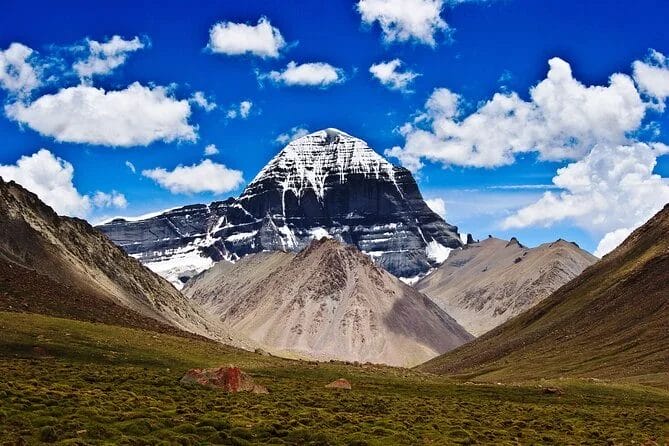
Kailash Mansarovar Yatra is undoubtedly one of the most sacred sites out there, surrounded by some of the most stunning views. So, if you are someone who wants to go on a spiritually enriching journey filled with breathtaking sceneries, then Kailash Mansarovar Yatra is among the must-go places. However, there are many things to consider before you decide to go on this journey, and one major aspect is the best time to go. So, let’s ask the question – what is the best time to go to the Kailash Mansarovar Yatra? Well, worry not, for this is exactly what we shall be discussing here.
In this blog, we provide you with information regarding the importance and spiritual significance of this journey, the climate conditions in this region across the year, and the best time to go on this journey. Along with this, we shall also provide information on how to go to Mansarovar Yatra from Nepal. Keeping this in mind, let’s get started.
Importance and Spiritual Significance of Kailash Mansarovar Yatra
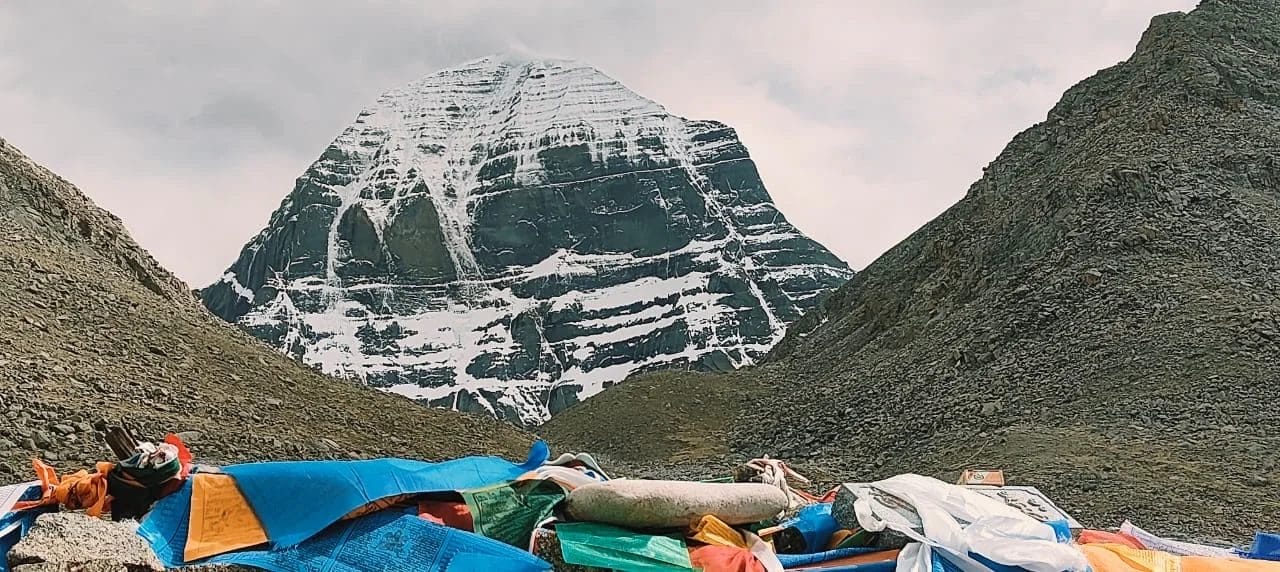
Before we discuss anything about the climate and things, you first need to know a bit about the spiritual significance of the Kailash Mansarovar Yatra. Knowing this shall provide you with a bit more spiritual and cultural context about this journey so that you will not be out of the loop when going on Kailash Mansarovar Yatra. Furthermore, it might just allow you to find a deeper spiritual connection on this journey as well. Now given this context, it would be helpful to know that Kailash Mansarovar is deeply spiritually significant in four religions. These religions, along with the significance of Kailash Mansarovar in these religions, are as follows:
1. Hinduism
According to Hindu belief, Mount Kailash is considered the home of Lord Shiva or, to put it in a more spiritual way, the eternal abode of lord Shiva and his consort, lord Parvati. This factor makes the journey deeply spiritual. It is believed that making the Kailash Mansarovar yatra with devotion allows anyone to achieve complete salvation and liberation from the eternal cycle of rebirth.
2. Buddhism
Besides Hinduism, Buddhism is another major religion that places deep spiritual significance on this journey. In Buddhism, there is a commonly held belief that Mount Kailash is the home of the Buddha Demchok. He is the Buddha who symbolises supreme bliss in the Buddhist Pantheon. Therefore, Buddhists believe that going on the Kailash Mansarovar journey helps them gain complete enlightenment or at least a part of it, depending on the capability of the person.
3. Jainism
Jainism is a lesser-known region when compared to Hinduism and Buddhism, but it is still a decently sized religion. According to the beliefs of this religion, the first Jain Tirthankara, Rishabhanatha, freed himself from the cycle of rebirth in Mount Kailash.
4. Bon
Bon is yet another lesser-known religion that places deep spiritual significance on this Kailash Mansarovar Yatra. According to this religion, Mount Kailash is a sacred Nine-story Swastika Mountain that leads them to the heavens.
While the specifics of the significance differ, it is without a doubt that all four of these religions put Mount Kailash and the journey of Kailash Mansarovar in high regard.
Also Read: Mount Kailash & Mansarovar: Sacred Pilgrimage Journey
Climate Conditions to Visit Kailash Mansarovar Yatra
And now, following the discussion about a bit of the spiritual aspect, let’s now talk a bit about the climate aspect. While we shall discuss the best time to visit Kailash a bit later, I should at least know the general climate conditions throughout the year before heading out and making the decision to travel to this region. After all, this region is remote and making the wrong decision can mean the difference between a smooth journey and a rough or even impossible one. So, keeping this in mind, the following is the general outline of the climate throughout the year in the Kailash Mansarovar region.
1. Summer (May to June)
The weather becomes much warmer and more comfortable. Although nights are still cold, that much is expected from the journey as you are in the mountains. While you can face occasional rain, which can make the roads a bit slippery, it is still way better than in previous seasons.
- Temperature: 10°C to 20°C (50°F to 68°F) in Day, 0°C (32°F) at Night
- Weather: Mild with occasional rainfall.
- Accessibility: Highly accessible with only a bit of slippery roads during rainfall.
2. Monsoon (July to August)
This season is much more accessible and way better than the winter. The temperature, although still a bit cold at the start, is much more comfortable, and the weather is much better. There can be a bit of snowfall, but that much is acceptable since this region is smack dab in the middle of the mountain region. You can definitely visit this region during this season, but you might face some difficulty if you are trekking. If you are on an off-road vehicle, then you are all good to go. Just be sure to pack normal clothes.
- Temperature: 10°C to 15°C (50°F to 59°F) during day, 0°C (32) at night
- Weather: Occasional rain and mild weather
- Accessibility: Some roads may be blocked, and some might be a bit tough to trek, but overall, it is highly accessible.
3. Autumn (September to October)
Following summer and spring, we have the final season of the year, autumn. In this season, the weather starts to get colder as the day progresses and heads towards winter. The skies are clear and air clean, making this season ideal for those interested in the views rather than the spirituality. The good news for trekkers is that routes are still open but might get a bit tough at higher altitudes.
- Temperature: 5°C to 15°C (41°F to 59°F) in day, -5°C to -10°C (23°F to 14°F) at night
- Weather: Clear skies and fresh air, but a bit cold during the later part.
- Accessibility: Highly accessible for just about anyone.
4. Winter (October to February)
The winter in this region is extremely cold, to say the least. Temperatures can routinely drop below 15 °C during the night and below 10°C during the day. Furthermore, there are also heavy snowfalls and icy conditions across the entire reason. As if the cold and snow were not enough, the heavy winds of this region sap whatever body heat you generate right away. To add the cherry on top, many of the trekking routes get completely blocked due to snow, making them impossible to access. Because of all this, you cannot get a permit to access this region during winter.
- Temperature: -15°C to -30°C (-5°F to -22°F) during the night and -10°C (14°F) during day
- Weather: Harsh winds, heavy snowfalls,
- Accessible: Blocked routes due to snow and winds
Now, from what we have said in this part, you can easily guess on your own which is the best time to go to Kailash Mansarovar Yatra while trekking and the best time to go on the Kailash Yatra helicopter.
Learn More:
Special Years and Dates
Now that we have gotten the basics of climate cleared out of the way, the next aspect of time we are going to talk about is the important special years and dates. To be honest, there are only four major special years and dates that you need to be mindful of if you want to travel to this region. These four key dates and times include:
- Horse Year (Next in 2026): Considered highly auspicious in the Tibetan tradition for enhanced blessings during the Kailash Mansarovar Yatra.
- Goat Year (Next in 2027): An ideal year for the Kailash Kora, offering powerful spiritual benefits.
- Full Moon: Pilgrimage during a full moon is believed to amplify spiritual significance.
- Saga Dawa Festival (May–July): Celebrates Buddha’s birth, enlightenment, and death with vibrant ceremonies and cultural experiences.
Keeping the special years aside, you can go on this journey in just about every month as long as you are mindful of the weather and climate and align with the full moon. You can further enhance this experience if you time your journey between May and July as you get the chance to experience the Saga Dawa festival.
Permits and Travel Restrictions
Now you have a general gist regarding the seasons and important times to go on Kailash Mansarovar Yatra. The next aspect you must know is the permits and travel restrictions for this journey. One thing you should know is that you must get multiple permits to go on this journey, and there are a few restrictions. So we shall cover each of them briefly.
A. Permits
Let’s cover the permits you must have to go on this journey first before we discuss the restrictions. The key permits to go on Kailash Mansarovar Yatra include:
1. Tibet Travel Permit (TTP):
Issued by the Tibet Tourism Bureau.
Required for all foreigners entering Tibet.
Organised only through an authorised travel agency in China.
2. Alien Travel Permit (ATP):
Required for visiting restricted areas like Mount Kailash and Mansarovar.
Issued by the Public Security Bureau in Tibet.
3. Military Permit:
Necessary for sensitive border areas around Kailash.
Applied for by the travel agency on behalf of the traveller.
4. Chinese Visa:
A valid Chinese tourist visa is required. This must be obtained in your home country before applying for Tibetan permits.
B. Restrictions
After taking note of all the permits, let’s now discuss the restrictions you might face on the Kailash Mansarovar journey. The thing here is that we can further divide the restrictions into three aspects: travel, political, and seasonal. Following is a brief overview regarding the restrictions you can face on this journey.
1. Travel restrictions
This form of restriction is man-made restriction and is all about things you must do to continue your journey. The key aspects of travel restrictions include:
- Organized Travel Only:
- Independent travel is not allowed. All foreign visitors must travel in organised groups or with a licensed travel agency.
- Guides and Escorts:
- A local Tibetan guide is mandatory for all tourists.
2. Political
While you must always follow the travel restrictions, they are constant, and political restrictions are not. You are only restricted from going to Kailash Mansarovar Yatra based on politics should there be specific political events or festivals in China.
3. Seasonal Restriction
Unlike other restrictions in this discussion, seasonal restrictions are caused by nature rather than humans. You are restricted from going to certain areas by nature since you can easily perish if you go there. Because of all of these natural reasons and risks, you cannot get a permit for this region during winter.
Learn More: Ultimate Guide to Kailash Tours: Packages, Costs, and Itineraries
Availability of Accommodation and Resources
Following the list of permits and restrictions, the next list on our agenda before we discuss the best time for Kailash Mansarovar Yatra is the availability of resources. In all honesty, you should not expect too many resources as the destination of this journey, as most of the journey itself is quite remote. That said, you can expect some basic facilities and resources. Some of the things you can expect on Kailash Mansarovar Yatra include:
- Basic lodges and guesthouses are available along the route, especially in Darchen (the base camp for Mount Kailash) and near Lake Mansarovar.
- Some monasteries near the route offer simple accommodations for pilgrims.
- Simple vegetarian meals are provided by local lodges, camps, or monasteries.
- Boiled water is usually available at lodges and camps.
- Pilgrims are encouraged to carry dry snacks (energy bars, nuts, biscuits) to sustain energy during long treks.
- Basic medical aid is available at stops like Darchen and Mansarovar.
- No advanced medical facilities exist; major medical emergencies require evacuation to larger towns or cities like Kathmandu or Lhasa.
- Limited rescue services are available, often through local agencies or military teams.
- Network coverage is sparse; Chinese SIM cards may work in some areas like Darchen.
- Limited Wi-Fi services are available at some lodges for an additional fee.
- Toilets are basic and often shared, usually pit-style or makeshift.
- Basic trekking supplies are available in towns like Darchen, but it’s best to bring all essentials (clothing, trekking poles, etc.) from home.
- Limited electricity is available, mostly solar-powered, to charge devices at an extra cost.
These are just about everything you can expect on your Kailash Mansarovar Yatra. As we mentioned previously, the destination and journey are in a remote location, and the resources are sparse there.
Best Time to Visit Mount Kailash: Choosing the Ideal Time
And now, after approximately 2k words of additional but vital information, we finally answer the key question of this blog: what is the best time to go to Kailash Mansarovar Yatra? Well, the best time is sometime between May and October since this time frame has the safest weather, clear skies, and unblocked routes. That said, even within this time frame, the best time to go to Kailash Mansarovar Yatra is between May, June and September. It offers the best weather, smooth trekking experience, and an enjoyable pilgrimage experience. Moreover, if you time your visit correctly, you can even catch up with the local festivals during this period.
So, the question is, what is the best time to visit the Kailash Mansarovar Yatra? Well, the simple and short answer to that would be between May and June and September.
How do you go to Mansarovar Yatra from Nepal?
And after covering the best time to go to Kailash Mansarovar Yatra, let’s now discuss how to go on this journey from Nepal. The only catch here is that the details of the journey shall depend on the travel package you choose and what is included in the travel itinerary. As this makes it almost impossible for us to give you a proper answer, we can give you an overall idea of the key travel routes taken regardless of which route you choose. The key travel routes and the overall overview of the journey include:
- Begin the journey by boarding flights to Tribhuvan International Airport in Kathmandu of Nepal, the main entry point for the Yatra to Kailash Mansarovar.
- Obtain necessary permits and visas through registered travel agencies or tour operators for going ahead with pilgrimage.
- Drive from Kathmandu to Rasuwagadhi or Syabrubesi, the actual Nep+al-China border town. It takes about 6-8 hours of road driving.
- Cross the border into Tibet, China, and continue by road via Kyirong.
- Proceed from Kyirong to Saga, then onwards to Lake Manasarovar and finally to Mount Kailash, following the prescribed pilgrimage route.
Also Learn:
Tips and Recommendations for Kailash Mansarovar Yatra
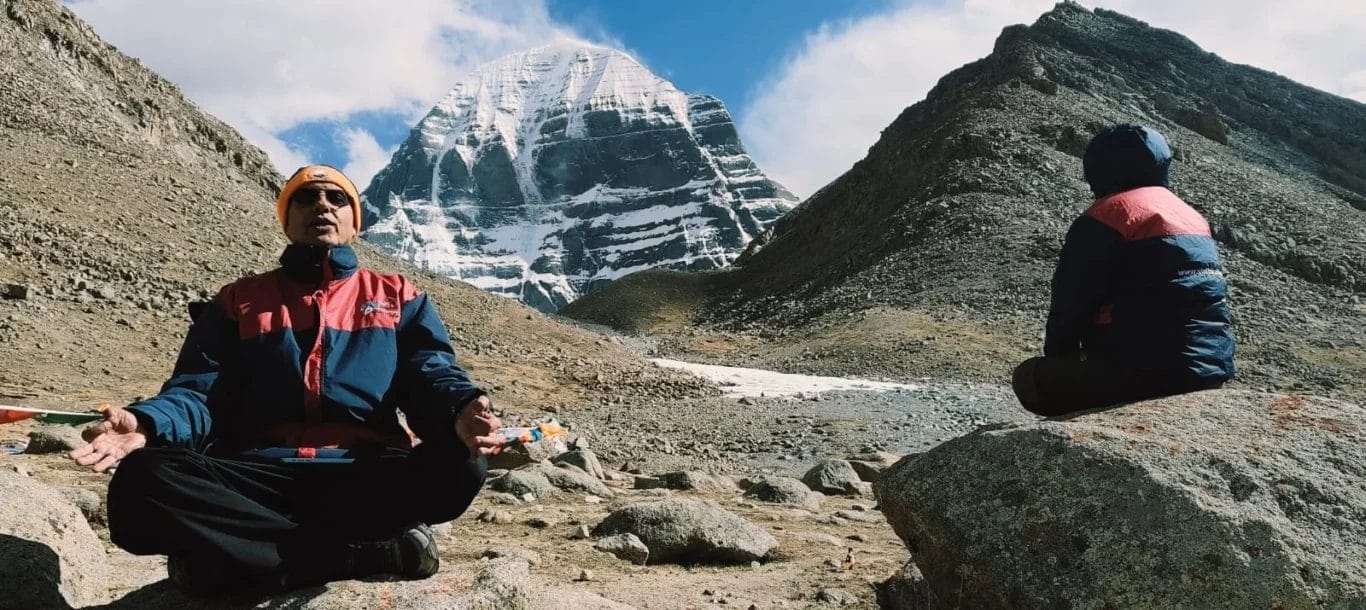
As we near the end of the topic, we almost forgot to cover one of the key topics regarding the journey of Kailash Mansarovar Yatra, and that is the essential tips. While it might seem redundant, knowing these tips can make the journey much more comfortable and enriching. So, with this in mind, let us provide you with a brief list of tips.
Pack essentials such as fleece jackets, waterproof and windproof jackets, and woollen clothes.
- Pack the waterproof and sturdy footwear.
- Having sunglasses, UV protection, and a waterproof cover is a bonus for a backpack and body.
- Always carry a first-aid kit with basic items.
- If you require any prescription drugs, never leave them behind.
- Drink abundant water at all times; this is particularly important at high altitudes.
- Pay proper attention to weather forecasts and be prepared for sudden changes.
- Be in good health before starting the Yatra. If you have chronic or acute health conditions, consult a doctor.
- Allow enough time for reaching any altitude to acclimate properly and avoid rushing.
Kailash Vision Treks: Kailash Mansarovar Yatra Best Tour Operator
Now, last but not least, let us answer the question as to which tour operator you should choose for the Kailash Mansarovar Yatra. Kailash Vision Treks shall be one of the best options you can choose from, as we are certainly one of the best tour operators on Kailash Mansarovar Yatra in Nepal. Why? Some of the reasons for picking Kailash Vision Treks include the following:
- Expert Guidance: Experience amassed over decades by the team members will provide you with information on accuracy, safety tips, and spiritual guidance across the journey.
- Customised Packages: They have flexible itineraries to suit your priority for comfort and ease on this pilgrimage.
- Safety Emphasis: Emphasis on health with proper acclimatisation, medical support, and well-planned routes.
- Hello, handle all permits, visas, and accommodation arrangements, removing stress from your trip.
- Local knowledgeable guides guarantee smooth logistics and immersion in the culture of the country. Personal attention is assured to individual needs for comfort and an indelible experience.